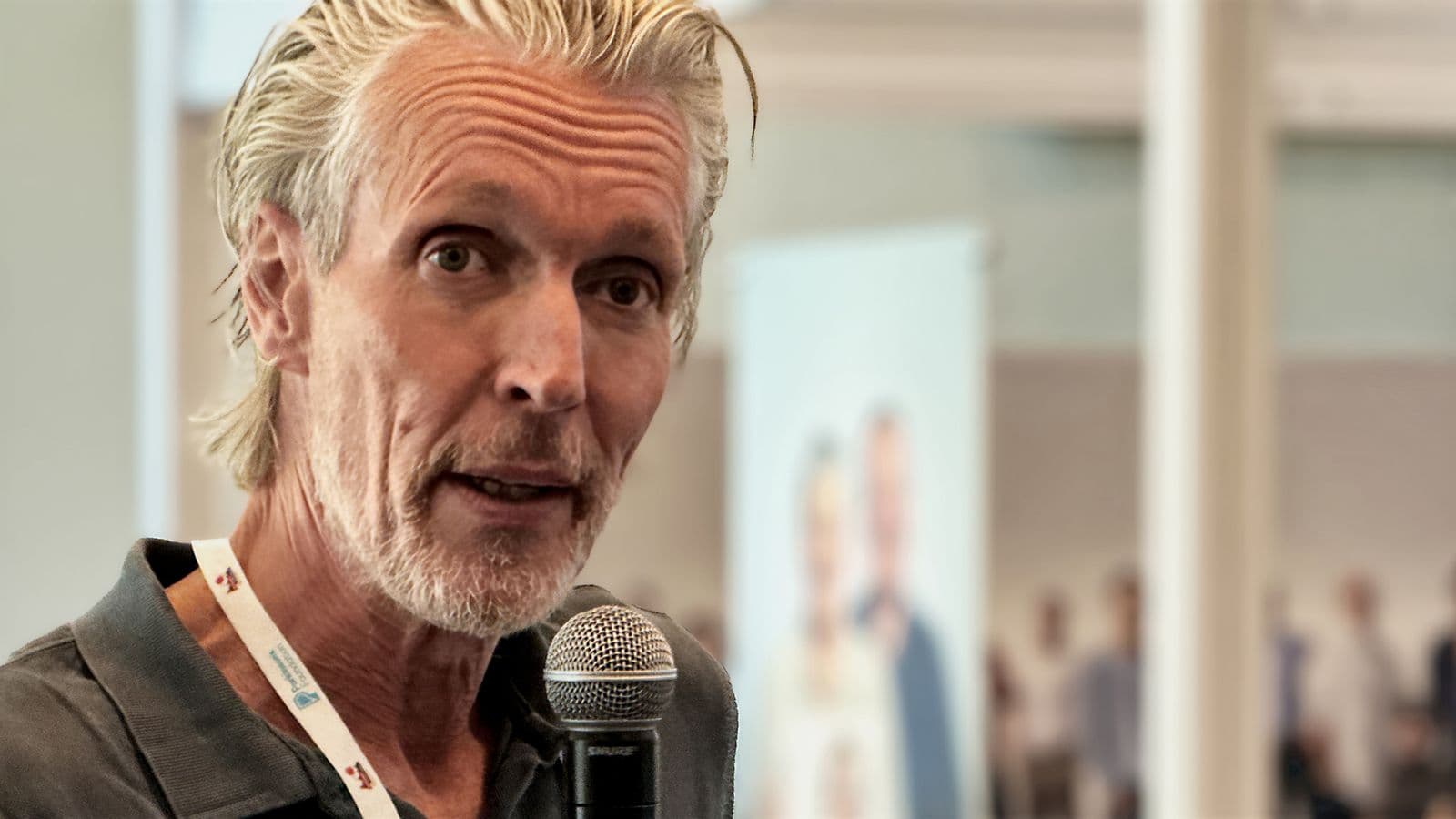
Anders M. Leines: After the Image Changed
For more than a decade, Anders M. Leines has documented Parkinson’s from the inside. First, he wanted to change how the disease was seen. Ten years later, he returned to the same people, and found a darker story about time and identity.
The information in this article is for educational purposes only and is not intended as medical advice. Always consult a qualified healthcare professional for medical questions.
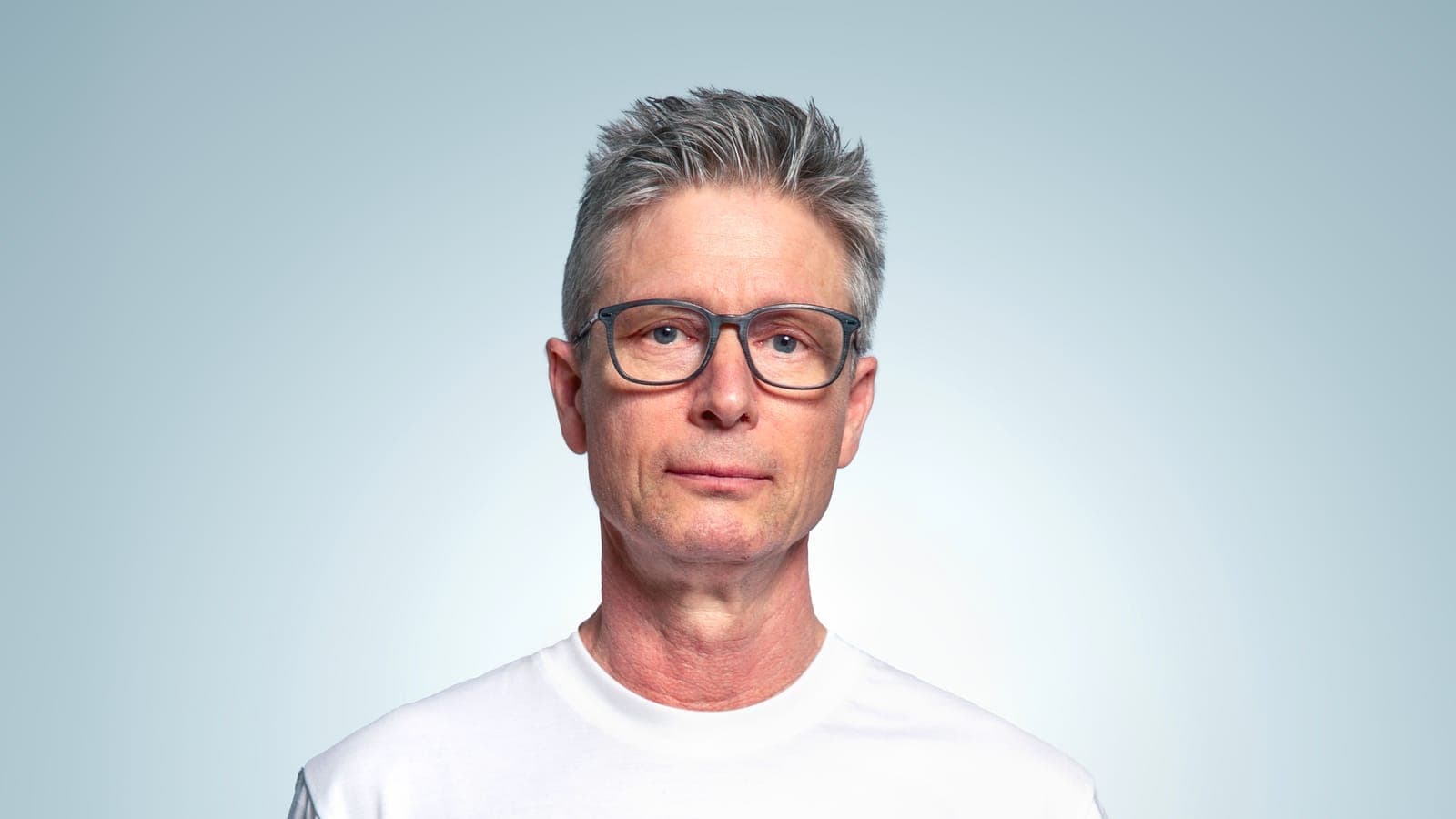
On a bright spring day in Oslo, Anders M. Leines walks through the corridors of NRK, where he has spent much of his working life. Outside, the light is sharp and generous. Inside the studio where we sit down to talk, Leines pulls the curtains shut. The room darkens.
“It’s better like this,” he says.
He has Parkinson’s disease, and light, heat, long conversations, standing too long, being available for too long - all of it has become something to manage. His body is visibly marked by the illness now: the involuntary movements, the pauses, the way speech and expression sometimes seem to arrive half a beat behind intention. Still, he is here. Still moving through the building, greeting colleagues, talking about projects, images, deadlines. Work still matters.
“It has meant a lot,” he says. “It keeps things normal.”
But normality now comes in intervals. He no longer works as much as he wants to. Part of his salary is covered through state sickness benefits. More often, he has to withdraw, find a quiet room, disappear briefly from the pace of the office until his body comes back within reach.
“Parkinson’s makes your world smaller,” he says. “Everything shrinks.”
He says it without drama. But when the interview is over, the fatigue is written across him. Then his phone rings. It is his wife, Annika. He smiles. They talk briefly about dinner. Something ordinary. Something nice. A meal to plan, a day to land in.
For all the public work Leines has done around Parkinson’s - exhibitions, films, interviews, congresses, years spent making the disease visible - there is also a private architecture holding things together: family, routines, work, systems, love. The things that stop a person from becoming only a diagnosis.
Over the years, Leines’ work has become part of the World Parkinson Congress and the wider international Parkinson’s community. The photographs he became known for - portraits of people with Parkinson’s who refused to look like the disease was supposed to look - still travel internationally. But Leines has become wary of the language of breakthroughs.
“I don’t really expect that,” he says. “For me, it’s something else. The people. The feeling of being part of something.”
That sense of belonging - to a group no one would choose, but which can still become a source of strength - is something he understands differently now than when he first picked up the camera to document Parkinson’s.
Cool people
When Leines was diagnosed in 2010, he was 47 and working as a journalist and photographer at NRK. He had spent years telling other people’s stories, many of them about health and illness. He was used to proximity, not exposure.
“I’ve never been very interested in talking about myself,” he says. “It was always about others.”
What struck him after the diagnosis was not only fear, but mismatch. The public image of Parkinson’s felt narrow and repetitive: an old man with trembling hands, bent posture, decline already written into the body. Leines did not recognize himself in that image. Nor did he recognize the people he was beginning to meet.
“They looked cool,” he says. “There was attitude.”
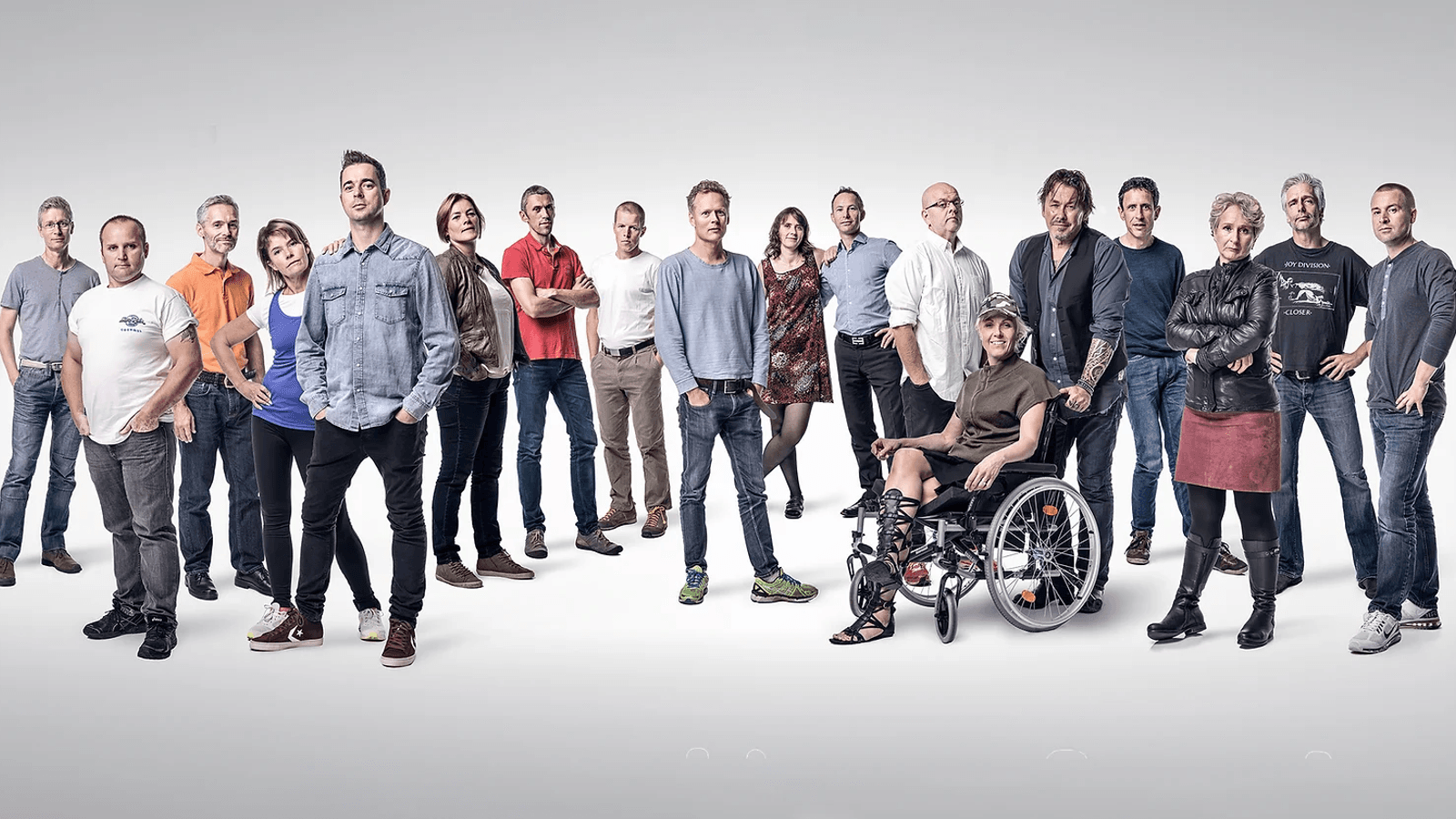
This was not denial. Parkinson’s, he knew already, was progressive, intrusive, unpredictable. But the people who had it were not reducible to the symptoms. That distinction became the foundation for his photo project, This is Parkinson’s.
He found participants through patient networks and public calls. He wanted people under 50. Younger-onset Parkinson’s still barely existed in the public imagination, and even inside parts of the patient community it was only beginning to claim space.
He photographed almost everyone who responded.
The result was not a campaign in the traditional sense. It was something more precise: a correction of the visual record. Here were people in the middle of life - stylish, exhausted, vain, funny, frightened, professionally active, socially complicated, sexually alive. Not symbols. Not inspirational examples. People.
The images travelled. They were shown in Norway and abroad. They became part of a broader movement of patient engagement, enabled by digital platforms and a growing impatience with being spoken for.
“When I started, the internet and video platforms made it possible to do things differently,” Leines says. “Patients were beginning to come forward.”
Almost accidentally, he became part of that shift himself: a man with a camera, a diagnosis and enough irritation at the existing imagery to do something about it. The project worked because it never argued too hard. It simply showed.
A darker chapter
But images age. People age. Diseases progress.
Leines stayed in touch with many of those he photographed. Meanwhile his own Parkinson’s moved deeper into the structure of everyday life. Medication became timing. Energy became calculation. Work required adaptation. The diagnosis, once new, became weather.
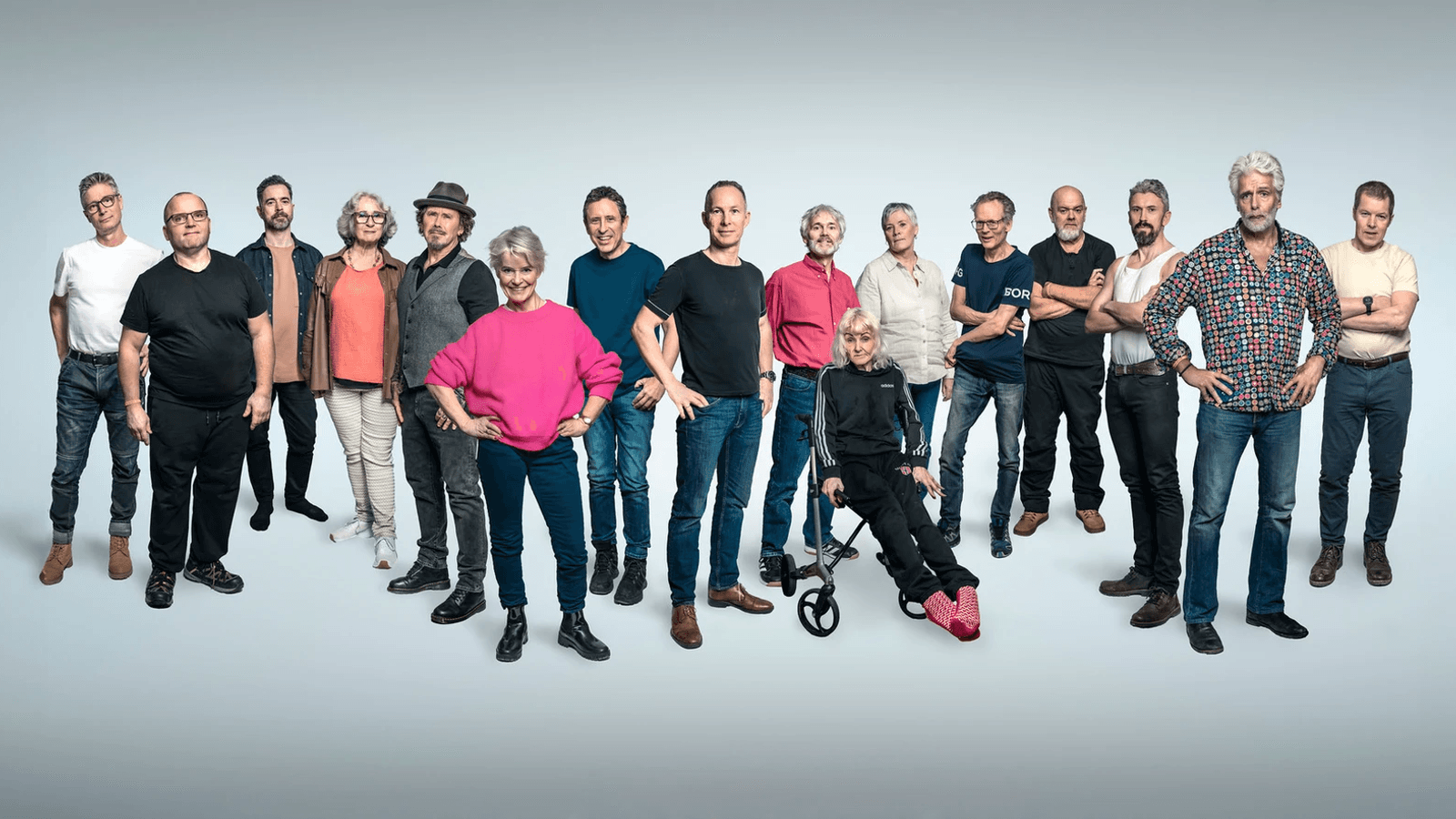
Then he returned to the project. Ten years later, the story had changed.
“The first project was about showing that people are more than their illness,” he says. “The second was about what the illness actually does.”
The second chapter is darker. Not because Leines wanted it to be, but because time had made it so.
Some participants were still doing relatively well. Others were not. Several had undergone advanced treatment, including deep brain stimulation. One had cycled extraordinary distances after surgery. Another seemed to function surprisingly well while ignoring much of the standard advice - not training obsessively, not immersing himself in the patient community, not making Parkinson’s the organising principle of his life.
Others had deteriorated severely. Some had died. One had taken his own life.
“It becomes impossible to simplify,” Leines says. “You see how serious it is. And how different it is.”
That difference has become central to how he understands Parkinson’s.
“It’s not one disease,” he says. “It’s many.”
He means it literally. Parkinson’s differs in symptoms, tempo, cognition, treatment response, side effects, family consequences, economic consequences. It differs by country, by class, by personality, by luck.
For researchers, that heterogeneity is a scientific challenge. For patients, it is existential. There is no single map through the disease.
“You have to get to know your own Parkinson’s,” Leines says. “You can listen to others. But you can’t just copy someone else.”
The thought is frightening, but also, in a limited way, merciful.
“If everyone is different,” he says, “you can also think: maybe it won’t go so badly for me.”
Slowly forward
Over time, Leines has grown wary of a particular kind of hope. He believes in research, treatment and the slow work of science. He knows many of the people doing that work. What troubles him is the recurring promise of a cure just around the corner.
“When I was diagnosed, people always talked about ten years,” he says. “In ten years, we’ll have this or that. You don’t hear that quite the same way anymore.”
The promise did not arrive on schedule. For someone living with a progressive disease, that matters. Scientific time and bodily time move differently. A treatment that is “close” in research terms may still arrive too late for the person waiting.
“Things are moving forward,” Leines says. “But slowly.”
This is part of why the second project matters to him. It resists both despair and marketing. It does not say nothing can be done. It says: look carefully. Look longer. Look at what time does.
A clearer pathway
In Norway, Leines says, it is relatively safe to be open about illness. Workplace protections. Benefits, rehabilitation services, neurologists, patient organisations. The system is imperfect, but it exists.
“Norway is a good place to be sick,” he says.
His own ability to remain at NRK is part of that story. The job has been adapted. Public support covers part of the gap between what he once could do and what he can do now. He is grateful for it, and impatient with narratives that describe only failure.
Still, he believes the system lacks something important: a clearer pathway after diagnosis, more similar to the structured cancer pathways used elsewhere in Norwegian healthcare.
“People have a lot of questions,” he says.
A newly diagnosed patient may leave the neurologist with medication, fragments of information and an overwhelming future. Leines would like to see something more systematic - a way of helping people early, before confusion and isolation take hold.
Through international contacts he has also seen how different life with Parkinson’s can look elsewhere. In some countries, people hide the diagnosis for fear of losing work. In others, stigma remains profound. In poorer countries, care may be inaccessible altogether.
“There are good reasons to hide it in many places,” he says.
The warning was wrong
Years ago, someone warned him against attending a Parkinson’s congress. It would be depressing, they said. Too many sick people. Too much visible decline. The warning turned out to be wrong. Yes, there were sick people. Of course there were. But there were also the most active among them: people still travelling, organising, researching, making films, testing technology, comparing methods, sharing small systems for surviving the day.
The power of such a congress, Leines says, lies in its combination of sorrow and momentum. A sad disease group, but not a defeated one. This is also where patient engagement becomes more than a slogan. At a congress, patients are not merely subjects or beneficiaries. They are participants in the knowledge economy surrounding the disease.
They bring forms of knowledge no clinical trial can fully capture: what it feels like to go off medication in a meeting, what impulse-control side effects do to a marriage, what fatigue does to speech, what stigma does to work. Leines has spent years translating that knowledge into images.
Losing control
At 63, he speaks about the future without theatricality.
“We’ll manage ten more years,” he says. “But it will get harder.”
What frightens him most is not only the body.
“I’m probably most afraid of what happens to the mind,” he says. “Dementia. But losing physical control is also very difficult.”
He is considering advanced treatment, including deep brain stimulation, but cautiously. He has filmed enough medical procedures to know that intervention is not magic. It is trade-offs, uncertainty, risk.
“I’ve seen enough to know what can go wrong.”
For now, medication still works. Not always. Not evenly. But enough.
Enough to sit in a darkened studio and talk for hours about photography, stigma, science, cycling patients, congresses, death and dinner.
When the medication stops working properly, he slows into what he calls “snail mode”. He withdraws. Hides a little.
This, too, is Parkinson’s.
The whole frame
It would be easy to frame Leines’ life with Parkinson’s as a story of loss. It would not be wrong. The disease has taken things, and continues to take them. But Leines refuses to let loss occupy the entire frame.
“Parkinson takes,” he says. “But it can also give something.”
Not compensation. Not meaning. But communities, friendships and encounters that otherwise would never have existed.
“I’ve met a lot of resourceful people,” he says.
This is not decorative optimism. It is accounting.
“Quality of life is everything put together,” he says. “And overall, my life is still good.”
That sentence contains much of what makes Leines worth listening to. Not because it is cheerful, but because it has survived contact with reality.
The photographs that began this work still carry force. Their original argument remains necessary: people with Parkinson’s are not the stock image of their disease. But after ten years - after returning to the same faces, after watching some lives continue and others narrow or end - the meaning has changed.
The first project insisted on visibility.
The second insists on duration.
Together they form a record not only of Parkinson’s, but of what happens when a person with the disease also becomes one of its witnesses.
Leines does not claim to have solved the story. If anything, he has become more suspicious of stories that solve too much.
“The disease itself is interesting,” he says. “But it's the people who really are fascinating.”
Look again.
Then look ten years later.
Also in Profiles
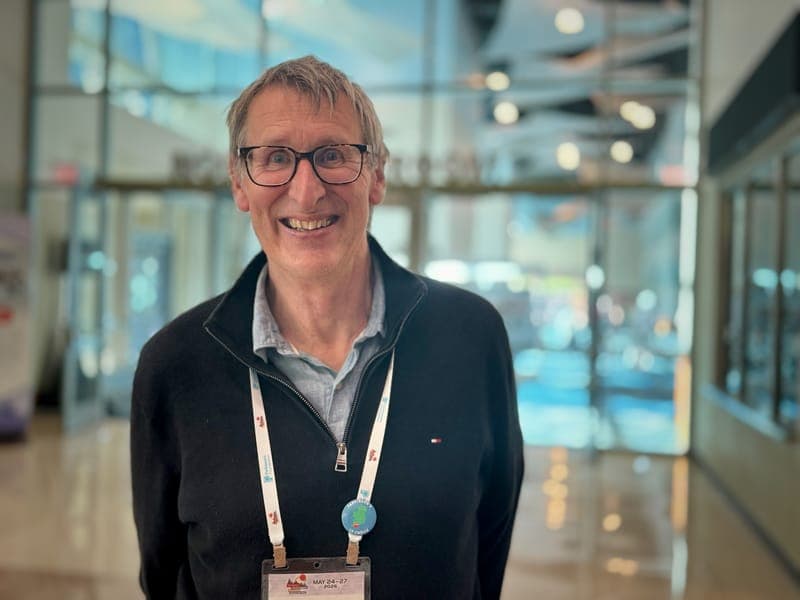
Roger Barker: Beyond the “Breakthrough”
“I don’t think we need a cure,” neuroscientist Roger Barker said. “If you can slow it down by 50 percent and pick people up early on, you’ve probably done it.”
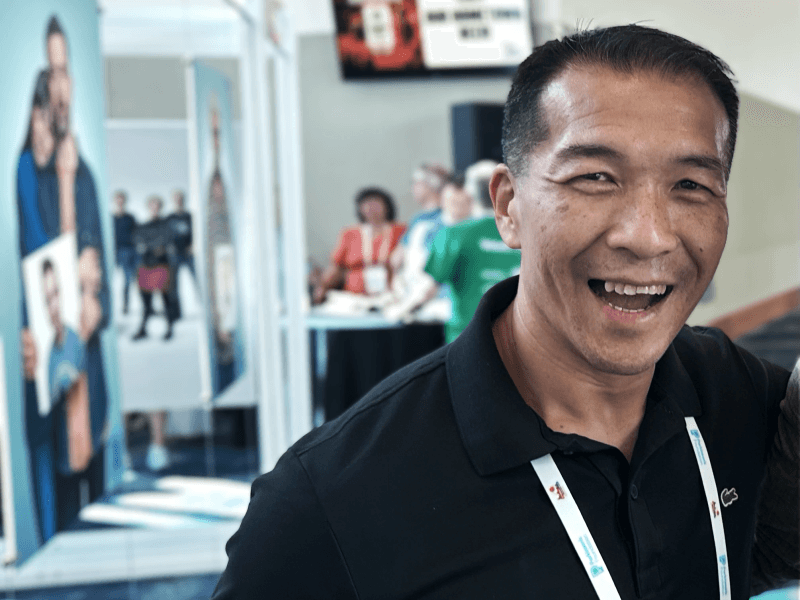
Jimmy Choi at WPC2026: Why Exercise Has Become the Field’s Most Urgent Medicine
Despite decades of research and billions invested, scientists still cannot stop Parkinson’s disease. For now, says endurance athlete and Parkinson’s advocate Jimmy Choi, the most effective intervention available may be something far less futuristic than many has hoped for: Exercise.
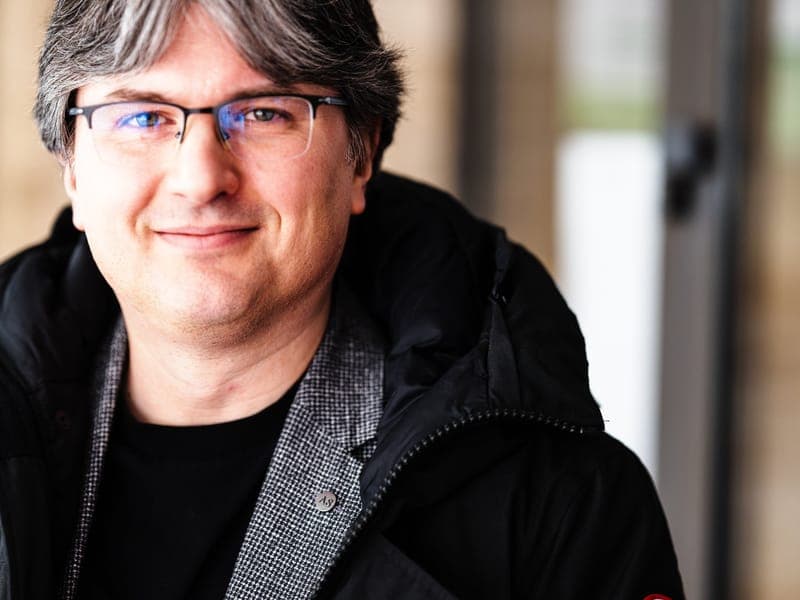
Charalampos Tzoulis: Fighting for a Breakthrough in Parkinson’s Disease
Charalampos Tzoulis may very well be one of the hardest-working scientists in the field of Parkinson's research. His single goal: Achieving the first real breakthrough.