Editor’s Note: Why We’re Building The Initiative
How we accidentally became the founders of a Magazine.
The information in this article is for educational purposes only and is not intended as medical advice. Always consult a qualified healthcare professional for medical questions.
I did not set out to start a magazine. Three years ago, I was diagnosed with Parkinson’s disease. Like most people, I had only a vague understanding of what that meant - tremor, stiffness, something progressive. I did not have a language for it. I did not have a map. So I did what I have always done when confronted with complexity: I started reading.
At first, it was fragmented. Articles, summaries, scattered studies. Then it became systematic. Scientific papers. Clinical trials. Review articles. I began collecting them, organizing them, trying to understand how they connected to one another. The number grew quickly. Hundreds of papers. Then thousands.
At some point, I realized I was no longer simply reading about Parkinson’s. I was trying to build an internal model of the disease itself - not only what Parkinson’s is, but also what it is not. How much uncertainty still remains. And this uncertainty matters more than most people realize.
Parkinson’s is now widely described by researchers as the world’s fastest-growing neurological disease. For those living with it, the disease reshapes everyday life in ways that are difficult to fully understand from the outside. It affects movement, sleep, cognition, mood, autonomy and identity. It alters not only how people function, but how they move through the world socially, professionally and psychologically. For many patients, the experience eventually produces something else as well: urgency.
When faced with a progressive disease survival instincts emerge. Some people begin searching relentlessly for information, treatments, strategies, structure - anything that might preserve function, independence or time. Increasingly, patients are forced to become active participants in navigating their own disease.
Or, as Dutch neurologist Bastiaan Bloem argued recently at the World Parkinson Congress 2026:
“Become an activist.”
That instinct - the need to understand, to act, to regain some degree of control inside uncertainty - became familiar to me very quickly after diagnosis.
But I also discovered something else. Almost none of the most important knowledge surrounding Parkinson’s is meaningfully accessible outside the scientific community. The information exists in enormous quantities. But it is locked inside highly technical language, scattered across journals, fragmented across disciplines and difficult even for highly motivated readers to assemble into a coherent picture. For many patients and families, it remains effectively out of reach.
That gap stayed with me. Over time, I began building an archive - eventually roughly a thousand curated scientific papers on Parkinson’s and related neurodegenerative diseases. Not everything. Just what seemed most rigorous, most relevant and most useful.
Still, the central problem remained the same: How do you make this knowledge usable?
Before Parkinson’s, I worked with digital systems - building platforms, structuring information and designing how complexity becomes navigable. That background eventually led me toward experimenting with artificial intelligence as a way of processing scientific literature at scale. The results were promising, to a point.
AI could help organize information, identify patterns and translate dense scientific language into something more readable. It could extract findings, compare studies and preserve nuance more effectively than many existing consumer health tools.
But it also became obvious that something essential was missing. Technology can process information. It cannot independently determine significance. It cannot ask the right questions. It cannot reliably distinguish between meaningful findings and overstated claims. It cannot place a study within the broader reality of a disease people are actually living with.
For that, human judgment still matters. At this point I called my brother.
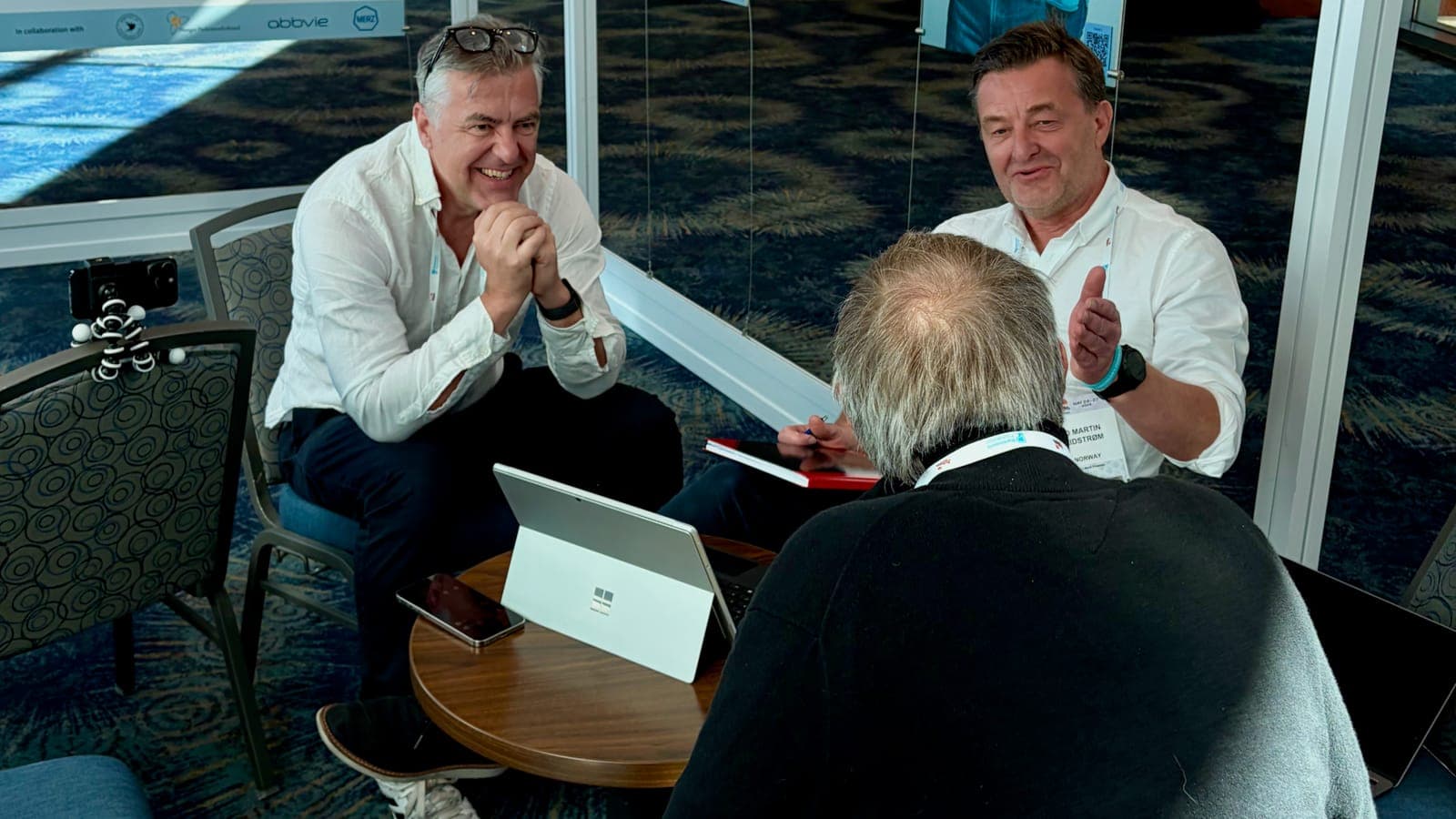
Jo Martin Fridstrøm has spent much of his professional life working as a journalist, correspondent and editor at leading Norwegian publications, covering economics, politics and international affairs. Our backgrounds are different, but we share a similar instinct about information: that complexity only becomes useful when it is tested, challenged and made understandable.
The idea for The Initiative emerged from those conversations. Not as a business plan. Not as a startup pitch. More as a recognition that something important was missing — and that perhaps we could help build it.
At its core, The Initiative is an attempt to translate. Not simply from scientific language into ordinary language, but between different forms of understanding: between research and lived experience, between laboratories and patients, between scientific uncertainty and everyday decision-making.
We will report on scientific developments. We will interview researchers, clinicians and patients. We will produce long-form reporting, analysis and explainers. But the ambition is not to cover everything. It is to make what we do cover intelligible and interesting.
That means staying close to the science without just flattening it into simplistic headlines. It means acknowledging uncertainty without turning everything into confusion. It means allowing complexity to remain where it is real - and clarity to emerge where it is possible.
All of our reporting will be reviewed. Accuracy is not optional.
At the same time, we want the writing to remain readable. Not simplified to the point of distortion, but accessible enough that non-specialists can meaningfully engage with it. That balance is difficult. We will not always get it perfectly right. But it is the only version of this project that makes sense to us.
Parkinson’s is still commonly described as a single disease. Increasingly, researchers believe it is not. Many scientists now suspect Parkinson’s represents several biologically distinct disorders sharing similar outward symptoms. Different causes. Different trajectories. Different responses to treatment. Even after reading thousands of papers, I am not convinced anyone fully understands how all the pieces fit together.
For patients, that creates a particular kind of uncertainty. There is no universal roadmap. No guaranteed progression. No single set of decisions that reliably produces a better outcome. You listen. You adjust. You experiment. You learn your own version of the disease.
At the same time, you are surrounded by information - some rigorous, some misleading, much of it incomplete. The desperation created by Parkinson’s can make people extraordinarily vulnerable to hype, false promises and exploitative treatments.
Information, in that environment, becomes more than education. It becomes protection. This is the environment The Initiative is being built for.
We are soft launching the publication in connection with the World Parkinson Congress 2026 because the congress represents one of the few places where the entire Parkinson’s ecosystem briefly converges: patients, neurologists, researchers, technologists, caregivers and industry. For a few days, the complexity becomes visible. Then it disperses again.
A publication cannot replicate that environment. But it can attempt to extend it - to follow developments over time, connect fragmented conversations and create continuity inside a field defined increasingly by complexity.
From the beginning, The Initiative is intended to be international. We plan to publish in more than twenty languages. That decision is partly practical. Parkinson’s is a global disease. The science is global. The patient experience is global. But it also reflects something simpler: access to knowledge should not depend entirely on language. Scientific literature remains overwhelmingly English-dominated. For many patients, caregivers and even clinicians, that creates a significant barrier. We want to lower it. Not by reducing complexity, but by making rigorous information available more broadly, across languages and formats, without sacrificing precision.
There are also aspects of Parkinson’s that I still do not write about easily. Medication side effects, for example, can be deeply physical, psychological and personal. Some of those experiences I have encountered myself.
Starting a publication in this space is not an obvious decision. There is already enormous amounts of information: patient organizations, journals, conferences, newsletters, advocacy groups. We are not trying to replace any of them. We are trying to connect them. To build something positioned between scientific rigor and lived experience - close enough to the research to remain accurate, close enough to patients to remain relevant.
On May 27, 2026, The Initiative goes live. It will not be definitive. It will not be complete. It will be a beginning.
For me, it is also the continuation of something that started with a diagnosis, moved through thousands of pages of scientific literature and gradually became outward-facing.
I still read.
I still try to understand.
The difference is that now, I am no longer doing it alone.
Also in Parkinson's Disease
Bas Bloem: The Era of Personalized Parkinson's Has Begun
For one of the world’s leading Parkinson’s researchers, Bas Bloem, the future of the field begins with a radical shift in perspective: Parkinson’s is not one disease, but millions.
Claire Henchcliffe: Rebuilding the Parkinson’s Brain
Parkinson’s treatment has so far largely meant replacing lost dopamine. Neurologist Claire Henchcliffe is helping test a far more ambitious idea: rebuilding damaged brain circuits themselves.
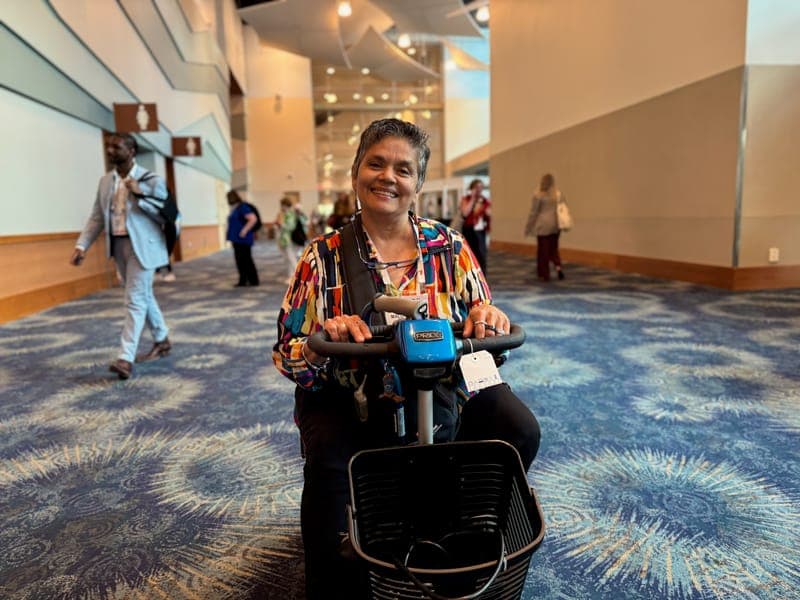
The New President of WPC: Malú Gámez Tansey - This is the Beginning of the End
Parkinson’s disease has long been understood through dying neurons and misfolded alpha-synuclein. Neuroscientist Malú Gámez Tansey believes chronic inflammation may be one of the central forces driving the disease.