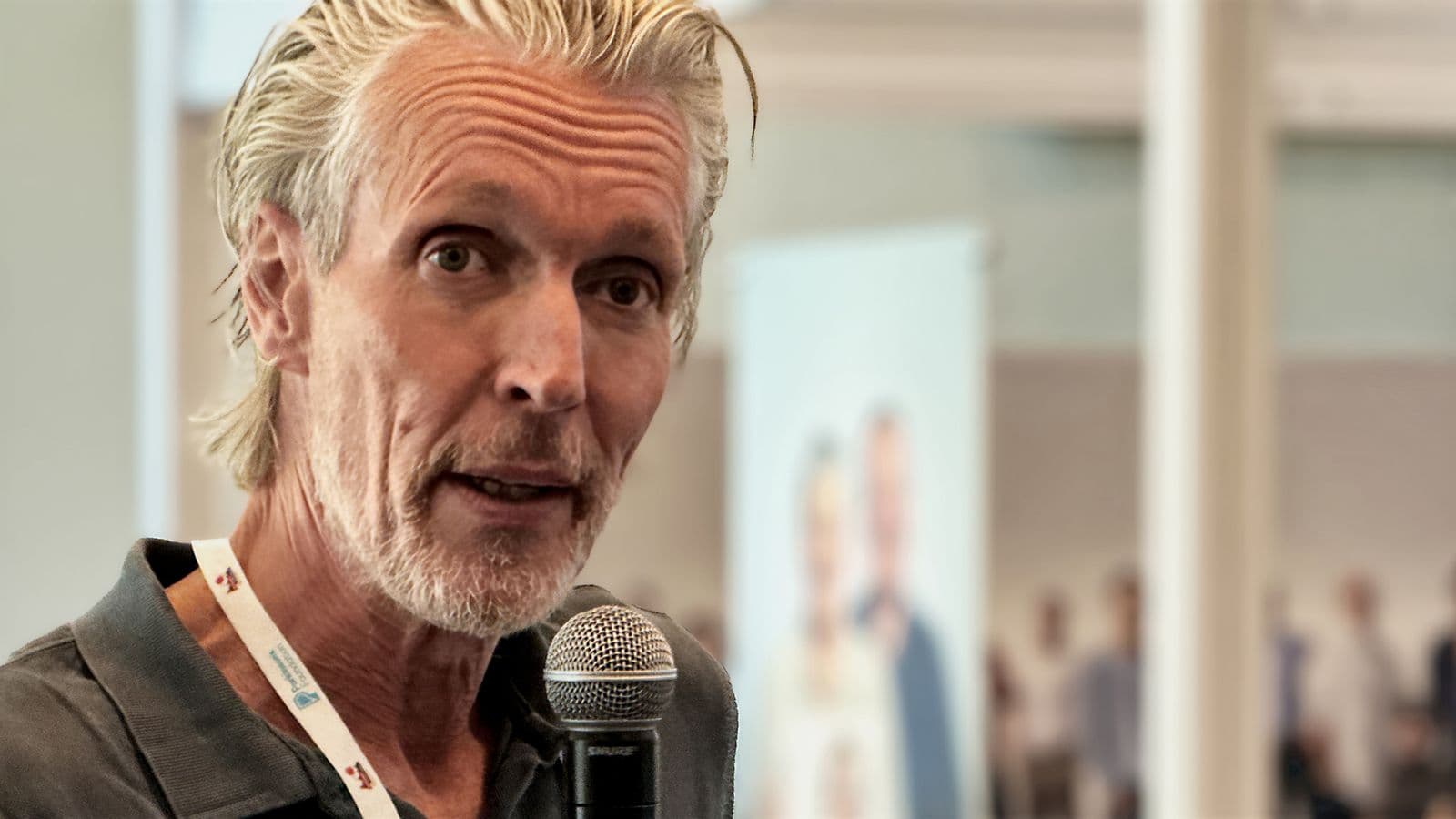
Roger Barker: Beyond the “Breakthrough”
“I don’t think we need a cure,” neuroscientist Roger Barker said. “If you can slow it down by 50 percent and pick people up early on, you’ve probably done it.”
The information in this article is for educational purposes only and is not intended as medical advice. Always consult a qualified healthcare professional for medical questions.
For decades, Parkinson’s researchers have searched for the decisive breakthrough. A cure. A transformative drug. A stem-cell therapy capable of restoring damaged neurons. A biological explanation that could finally bring one of medicine’s most stubborn neurodegenerative diseases under control. Yet Parkinson’s remains resistant to simple solutions.
Clinical trials repeatedly fail. Patients with the same diagnosis often progress in radically different ways. Even basic questions - what exactly Parkinson’s is, where it begins and whether it represents one disease or many - remain unsettled.
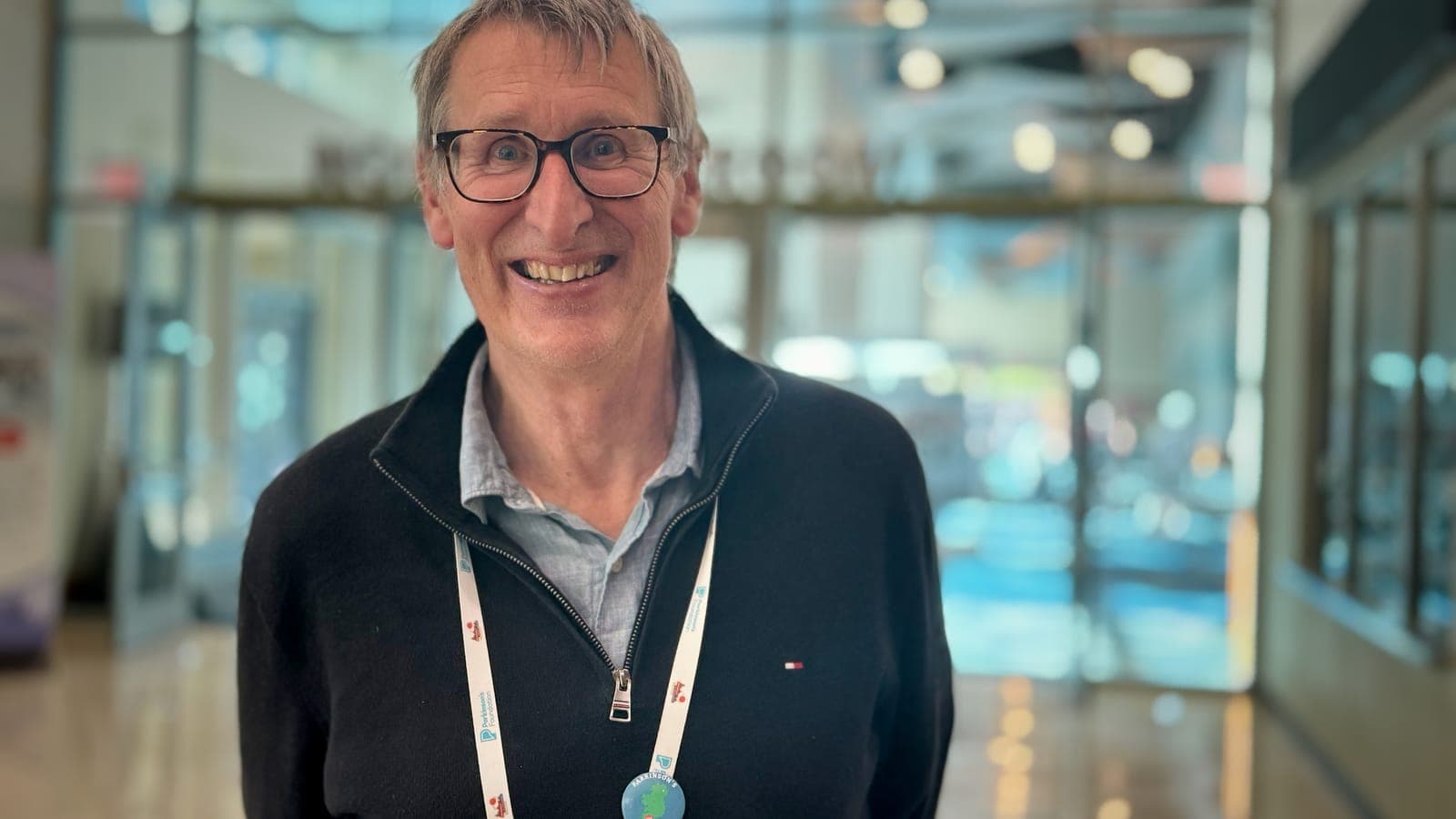
In an interview with The Initiative Magazine, Barker, one of the world’s leading Parkinson’s researchers and a principal investigator in stem-cell replacement therapies, argued that part of the problem may lie in how researchers think about the disease itself.
“The trouble with the word breakthrough,” Barker said, “is it’s used all the time.”
For patients and families, the word carries enormous emotional weight. A breakthrough implies decisive progress - something capable of fundamentally altering the course of disease. But Barker believes Parkinson’s biology may simply be too complex for single discoveries to suddenly solve it.
“Breakthroughs happen all the time,” he said. “But they never seem to take us anywhere.”
If anything, Barker’s outlook is unusually pragmatic. Throughout the interview, he repeatedly returned to the same idea: Parkinson’s may need to be understood less as a singular neurological malfunction and more as a systems-level disorder involving overlapping biological processes unfolding over decades.
That shift in thinking is changing how many researchers approach everything from inflammation and protein aggregation to environmental exposure, clinical trials and stem-cell therapies. It is also reshaping what success itself might ultimately look like.
Reductionism
One of Barker’s central frustrations is what he sees as the field’s tendency toward reductionism. Researchers often isolate one pathway - mitochondria, inflammation, protein clearance, autophagy - and study it intensely in relative isolation. But Parkinson’s, he argues, may emerge precisely through the interaction of many systems rather than the failure of one.
“Some people say it’s to do with mitochondria,” Barker said. “Some people say it’s all to do with the protein. Some people say it’s inflammation.”
“The reality is it’s probably all of those.”
That complexity may help explain why therapies that appear promising in laboratories often struggle in clinical trials. Targeting one pathway may simply be insufficient against a disease involving overlapping biological failures unfolding simultaneously across multiple systems.
For years, Parkinson’s research has increasingly centered on alpha-synuclein, the protein that accumulates in Lewy bodies and is widely believed to play a central role in neurodegeneration. Barker does not reject its importance.
“It clearly has a role to play,” he said.
His concern is narrower, but potentially far-reaching.
“My worry,” Barker said, “is people have linked alpha-synuclein to Parkinson’s rightly so, but they’re becoming a bit too focused on it.”
The comparison he returned to repeatedly was Alzheimer’s disease. For decades, Alzheimer’s research became dominated by amyloid-beta, attracting enormous scientific and financial investment while other possible mechanisms received comparatively less attention.
“At some point,” Barker said, “you have to come to the conclusion if you’re pursuing something for 30 years and it’s not really making much progress, perhaps it’s not the whole story.”
That does not mean alpha-synuclein is irrelevant. It means Parkinson’s may be far more biologically entangled than any single-target explanation can capture. Later in the interview, Barker summarized the issue more directly.
“Parkinson’s is a systemic disorder which affects the brain,” he said.
The distinction matters. For decades, Parkinson’s was largely treated as a disorder originating inside dopamine-producing neurons themselves. Increasingly, however, researchers are beginning to view the disease through a broader systems framework involving inflammation, metabolism, aging, environmental exposure and cellular stress responses interacting over time.
Barker repeatedly returned to the danger of fields becoming intellectually trapped inside their dominant theories.
“I think the problem with fields generally is people just swing from one extreme to the other,” he said. “Everything’s cells and then it’s all environment, then it’s all exercise and then it’s all alpha-synuclein.”
The challenge, he argued, is holding those strands together simultaneously rather than allowing one explanatory model to crowd out all others.
Why Clinical Trials Fail
That complexity may also help explain one of the field’s deepest frustrations: the repeated failure of clinical trials. Many therapies that appear promising in animal models or small studies ultimately fail once tested across large patient populations.
Barker suspects part of the problem may be that Parkinson’s patients who appear clinically similar are biologically far more heterogeneous than researchers once assumed.
“There clearly are people who progress at slightly different ways and have slightly different outcomes,” he said.
Some patients develop dementia rapidly. Others remain cognitively intact for decades. Some decline aggressively. Others progress slowly over many years. The unresolved question is whether those represent fundamentally different diseases, or different trajectories of the same underlying process.
“I’ve always asked this question,” Barker said. “Are there many different types of Parkinson’s? Or is there actually one type of Parkinson’s that runs at different kinetics?”
In other words, two patients may share the same disease process while experiencing very different rates of progression - what Barker described as more or less “malignant” forms of the same biology.
“I am more of the belief,” he said, “that the processes are pretty much the same.”
But subtle variations in inflammation, protein clearance systems or cellular stress pathways may still profoundly alter how quickly degeneration unfolds.
One experiment from Barker’s own laboratory reinforced how difficult biological variability may be to interpret. The study involved Huntington’s disease, a genetic neurodegenerative disorder caused by a single known mutation. Researchers treated patients with a drug designed to increase autophagy - the cellular process responsible for clearing damaged proteins.
Clinically, the treatment initially appeared to show little effect. But researchers then converted the trial patient cells directly into neurons in the laboratory and exposed those neurons to the same drug. The results split into three distinct biological response patterns.
“When you took the three different responses in nerve cells and transposed it onto the clinical data,” Barker said, “you saw something that was much more significant.”
Even patients carrying the exact same disease-causing mutation appeared biologically heterogeneous.
“We don’t have any idea what those processes are,” Barker said.
The implications for Parkinson’s disease - vastly more complex than Huntington’s - are enormous. The same drug may genuinely help one biological subgroup while appearing statistically ineffective once averaged across a mixed population. That possibility is increasingly pushing Parkinson’s research toward precision medicine approaches more commonly associated with cancer treatment.
Combination Therapy
The systems-level model also changes how Barker thinks about treatment itself.
“If I was given free rein,” Barker said, “I would do a trial where I probably combined a whole series of medications.”
His hypothetical strategy sounds less like a traditional neurological intervention and more like combination therapy approaches used in oncology or HIV treatment.
“I would give the antibody,” he said, referring to anti-synuclein therapies. “I would give something that would increase the clearance of synuclein. I would give an anti-inflammatory.”
“I would probably use three or four drugs, something on mitochondria.”
Individually, many such therapies may produce only modest effects.
“Together,” he said, “they’ll could probably shift the dial.”
The idea reflects a growing recognition across neurodegeneration research that complex diseases may resist single-target solutions. Instead, future therapies may need to simultaneously influence inflammation, protein aggregation, metabolism and cellular resilience together.

“I Don’t Think We Need a Cure”
Asked directly when Parkinson’s disease might finally be cured, Barker gave an answer that initially sounded almost counterintuitive.
“I don’t think we need a cure,” he said.
The statement was not pessimistic. Nor was it a retreat from treatment. Instead, it reflected a different way of thinking about neurodegenerative disease itself.
The average age of Parkinson’s diagnosis is around 70. For many patients, life expectancy differs relatively little from the broader population. The central challenge is often not lifespan itself, but the gradual accumulation of disability over time.
“If you can slow it down by 50 percent,” Barker said, “and pick people up early on, you’ve probably done it.”
In that framework, the goal shifts from eliminating Parkinson’s entirely to delaying its most debilitating phases for as long as possible.
Barker described a future in which researchers identify high-risk patients years before classical symptoms emerge - perhaps through REM sleep behavior disorder or other early biological markers - and begin treatment while degeneration is still limited.
“So instead of getting it 10 or 15 years later,” he said, “you get it 20 or 30 years later.”
The arithmetic, he argued, changes everything.
“You’ll be over 120 before you’re running into problems.”
The idea reflects a broader transition underway across neurodegeneration research. Increasingly, scientists are beginning to think less in terms of absolute cures and more in terms of slowing biological aging, delaying pathology and extending healthy neurological function.
The distinction may sound semantic. Barker believes it is fundamental.
Stem Cells and the Limits of Repair
That same realism shapes Barker’s views on stem-cell therapies, one of the most closely watched areas in Parkinson’s research.
Barker has spent years working on cell replacement strategies designed to restore dopamine-producing neurons lost during disease progression. Multiple companies and academic groups are now conducting clinical trials using stem-cell-derived dopamine neurons implanted into patients’ brains.
“There are probably 15 or 20 companies running trials,” Barker said.
Early results have been encouraging in at least one respect.
“They’ve shown they’re feasible,” he said. “The product itself is safe.”
But efficacy remains less certain. Researchers still do not fully understand the optimal dose, delivery methods, patient selection criteria or immune therapies needed to keep transplanted cells alive long term.
“I think there’s enough there to give us optimism,” Barker said. “But I think the field mustn’t run ahead of its data.”
His caution becomes especially sharp when discussing public misconceptions around stem-cell therapies.
“The biggest misconception,” he said, “is that dopamine stem-cell therapies are a cure.”
“They’re just replacing dopamine,” Barker said. “The disease process itself carries on.”
The distinction matters enormously. Cell replacement may repair one damaged circuit while leaving the broader disease biology untouched.
For Barker, that distinction reflects a larger misunderstanding that has long shaped Parkinson’s research itself: the assumption that replacing what is lost necessarily stops the underlying disease process.
Increasingly, researchers suspect the biology is far more complicated than that.
Pollution and Inflammation
Like many researchers at the World Parkinson Congress, Barker increasingly believes environmental exposures may play an important role in neurodegeneration.
“I think the role of pollutants and intoxicants is going to be quite important,” he said.
But his interest extends beyond pesticides or industrial toxins alone.
Barker’s laboratory has been studying transposable elements - ancient viral sequences embedded inside human DNA. Much of the genome consists of these dormant viral remnants, normally held inactive by cellular regulatory systems. As the brain ages, however, those control systems may weaken.
“We found in the Parkinson’s brain they start getting re-expressed,” Barker said.
To the immune system, such reactivated viral fragments may resemble genuine infections.
“As far as your brain’s concerned,” Barker said, “that’s a virus. I better attack it.”
The result may be chronic inflammatory activation gradually contributing to neurodegeneration. Pollution, infections and aging-related genomic instability may therefore converge through common inflammatory pathways.
“I think there may be some commonality,” Barker said.
The same broader systems thinking increasingly extends beyond molecular biology alone. Researchers have also become far more interested in exercise, metabolism, sleep and environmental health than they were even fifteen years ago.
Exercise, Diet and Agency
Despite his emphasis on complex biology, Barker repeatedly returned to something far simpler: exercise.
“I think we’ve underestimated the impact of exercise and diet,” he said.
For years, such interventions were often treated as secondary or “fluffy” science compared with molecular therapeutics. Increasingly, however, researchers view them as biologically meaningful.
Exercise affects inflammation, metabolism, cardiovascular health, stress resilience and social interaction simultaneously.
“You don’t need a doctor to tell you to do it,” Barker said.
That autonomy matters.
“It’s very empowering,” he said.
The same perspective also shapes his advice to newly diagnosed patients. If diagnosed himself, Barker said he would focus heavily on exercise, diet, research participation and maintaining realistic expectations.
He would also avoid becoming consumed by online forums and exaggerated medical claims.
“I would keep off the internet with all of the different forums,” he said.
Instead, he said he would search carefully for clinical trials worth joining and focus on maintaining long-term health as effectively as possible.
The Moonshot Problem
At one point in the interview, Barker unexpectedly launched into a detailed discussion of the Apollo program. He has become slightly obsessed with it, he admitted.
“The average age of the people in mission control when they landed on the moon was 28,” he said.
What fascinates him is not simply the technological achievement itself, but the coordination. Thousands of people worked toward a single clearly defined objective backed by enormous resources and urgency.
“You could move mountains,” Barker said.
Parkinson’s research, however, lacks that kind of clarity.
“We know what landing the man on the moon is,” he said.
But unlike the Apollo program, the individual scientific roles are far less obvious.
“Am I making the lunar module?” Barker asked. “Or am I in charge of the engines?”
The biological complexity of Parkinson’s makes coordination far more difficult than engineering. Still, Barker believes the field is becoming more collaborative. Open-access datasets, international consortia and philanthropic initiatives such as ASAP - Aligning Science Across Parkinson’s - are accelerating cooperation across institutions and disciplines.
Yet modern science still contains tensions between openness, competition, career incentives and intellectual ownership.
Young researchers, Barker noted, still depend heavily on authorship prestige and grant success. Those structures can discourage full collaboration even when researchers support it philosophically.
“How we recognize people’s contributions,” Barker said, “has to change.”
The culture of science itself, he argues, may ultimately matter almost as much as the science.
Beyond the Beginning
Asked where neuroscience currently stands in its understanding of Parkinson’s disease - at the beginning, middle or approaching a breakthrough - Barker paused.
“I think we’re beyond the beginning,” he said.
Compared with the first World Parkinson Congress, the field now possesses vastly more sophisticated genetic tools, imaging technologies and pathological data. Researchers can analyze individual cells, map spatial transcriptomics and study molecular changes across tissue with extraordinary precision.
The challenge is no longer merely generating data. The challenge is integrating it.
“I think we have a lot of the parts that are there,” Barker said.
But he warned again against reducing Parkinson’s to any single pathway or explanation.
“You don’t want to be too reductionist,” he said.
Because Parkinson’s, ultimately, may resist simplicity itself.
Also in Profiles

Jimmy Choi at WPC2026: Why Exercise Has Become the Field’s Most Urgent Medicine
Despite decades of research and billions invested, scientists still cannot stop Parkinson’s disease. For now, says endurance athlete and Parkinson’s advocate Jimmy Choi, the most effective intervention available may be something far less futuristic than many has hoped for: Exercise.

Anders M. Leines: After the Image Changed
For more than a decade, Anders M. Leines has documented Parkinson’s from the inside. First, he wanted to change how the disease was seen. Ten years later, he returned to the same people, and found a darker story about time and identity.
Charalampos Tzoulis: Fighting for a Breakthrough in Parkinson’s Disease
Charalampos Tzoulis may very well be one of the hardest-working scientists in the field of Parkinson's research. His single goal: Achieving the first real breakthrough.