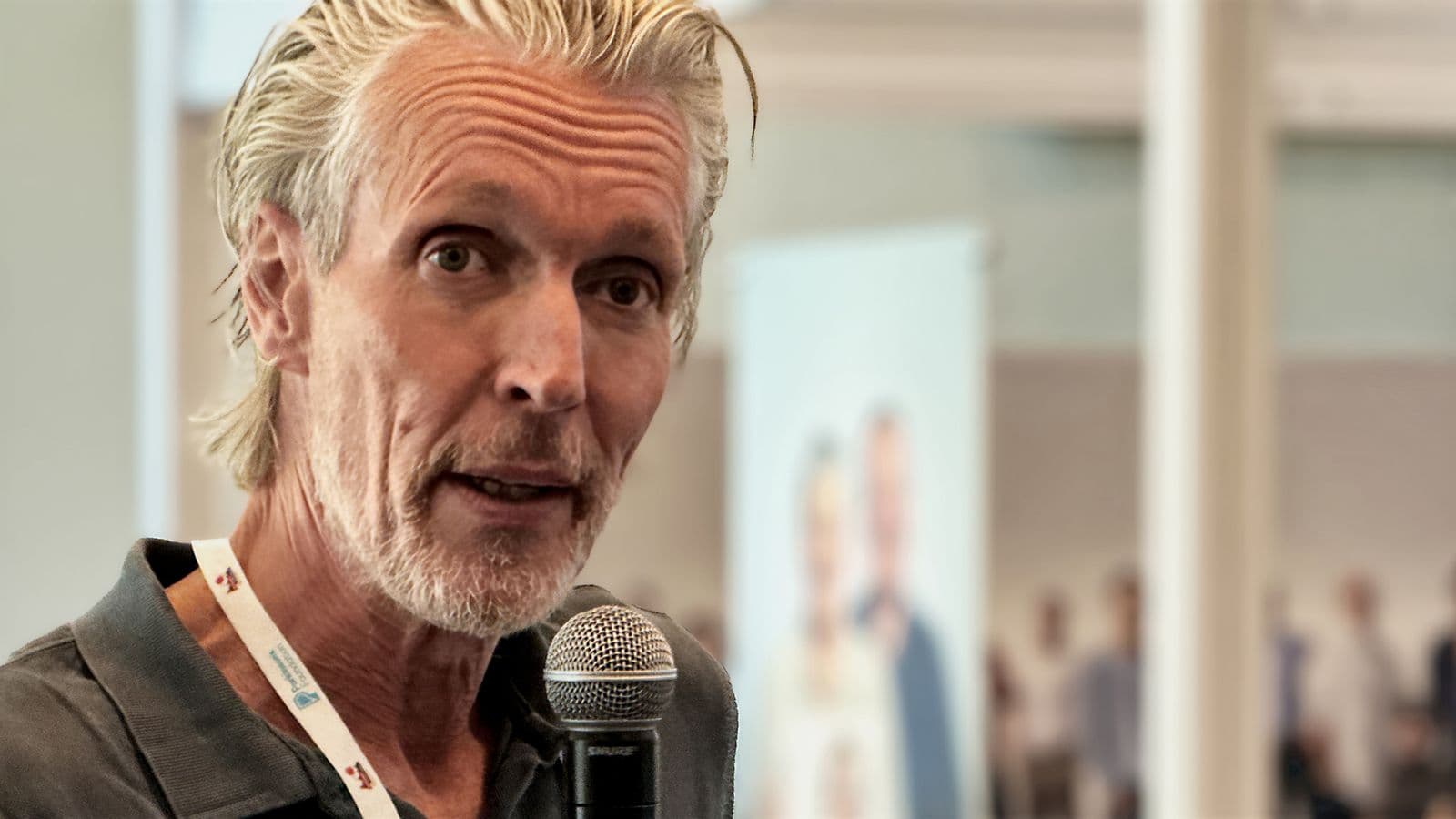
Inside WPC2026: The Changing Future of Parkinson’s Disease
At the opening of the World Parkinson Congress 2026, the mood inside the convention halls felt split between optimism and realism.
The information in this article is for educational purposes only and is not intended as medical advice. Always consult a qualified healthcare professional for medical questions.
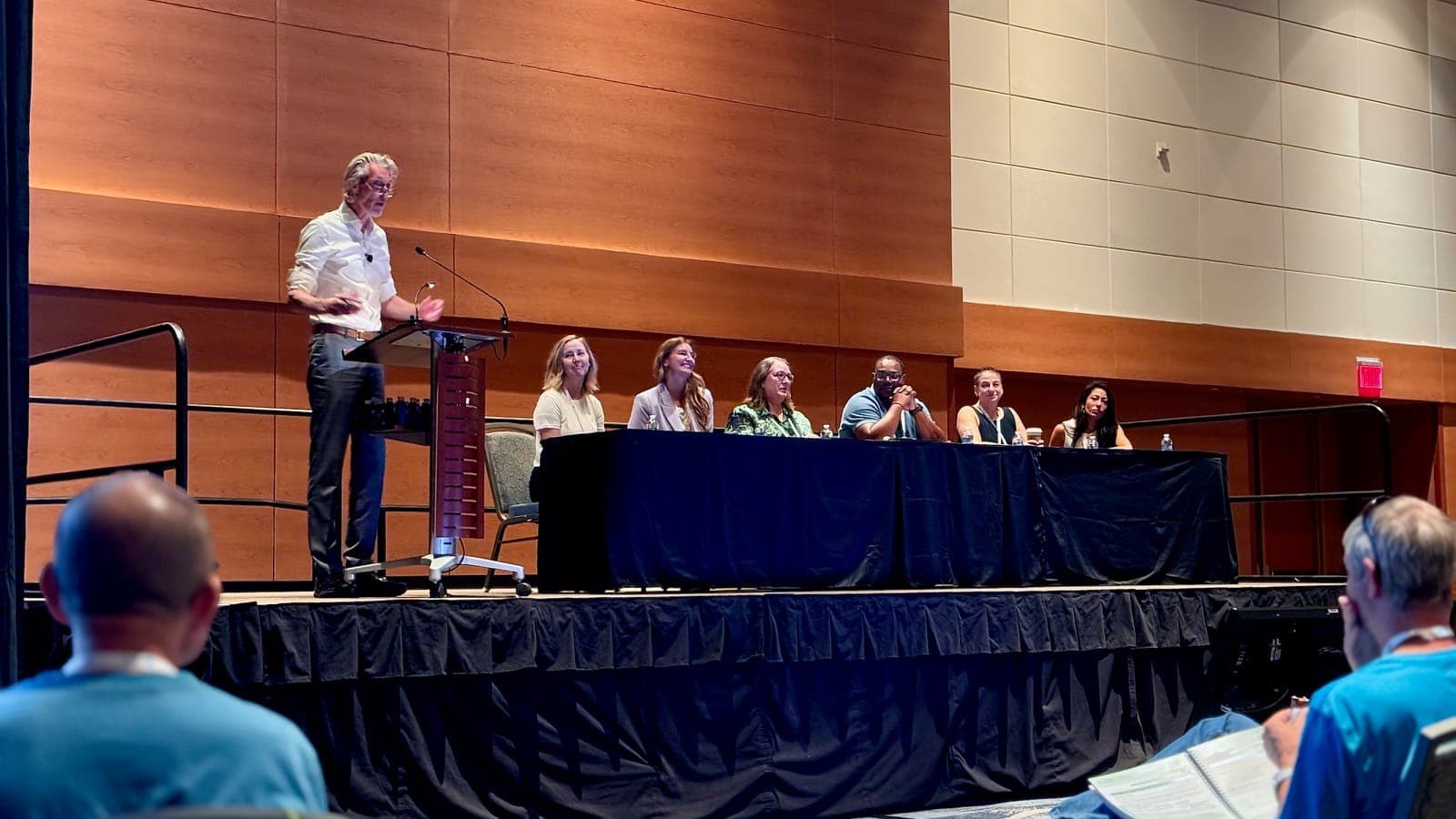
Thousands of neurologists, researchers, clinicians and people living with Parkinson’s had gathered in Phoenix for what has become one of the world’s most influential meetings on the disease. The programme was saturated with the language of scientific ambition: biomarkers, alpha-synuclein testing, genetics, precision medicine and disease subtyping.
But when Dutch neurologist Bastiaan Bloem stepped onto the stage for the opening session, the message he delivered was notably less triumphant than the futuristic language surrounding much of the congress.
“We are faced with a situation where one trial after the other with drugs is negative,” Bloem told the packed auditorium.
The remark landed heavily.
Biological redefinition
Few figures in Parkinson’s medicine currently command the kind of authority Bloem carries inside the field. In the corridors outside one of the main halls, attendees queued almost immediately after his session ended - for photographs, handshakes, brief conversations and reassurance. Part neurologist, part public advocate, Bloem has become one of the most recognizable public faces in global Parkinson’s care.
That visibility gave additional weight to what amounted, in many ways, to a public acknowledgement of the field’s central frustration. Despite decades of research, enormous pharmaceutical investment and extraordinary advances in neuroscience, researchers still cannot stop Parkinson’s disease.
Existing therapies can alleviate symptoms. Deep brain stimulation can improve quality of life for some patients. But no treatment has succeeded in halting progression itself. The tension between scientific sophistication and clinical limitation increasingly defines the current moment in Parkinson’s research.
Throughout WPC2026, researchers debated whether Parkinson’s should even be considered a single disease. Much of the science dominating the congress pointed toward a biological redefinition of Parkinson’s through genetics, biomarkers and alpha-synuclein assays capable of detecting disease years before symptoms emerge. Increasingly, scientists suspect Parkinson’s may actually represent several distinct disorders sharing similar outward symptoms - a possibility that could eventually reshape treatment, but which may also help explain why so many clinical trials have failed.
Scientists here spoke repeatedly about the possible end of “one-size-fits-all” Parkinson’s care. Research presented throughout the congress focused increasingly on individualized treatment approaches based on genetics, inflammation pathways, tissue biomarkers and prodromal disease detection - identifying Parkinson’s years before the classic motor symptoms appear.
Some researchers described this as the beginning of a new era. But optimism remained cautious.
Fastest-growing
Bloem framed the challenge not simply as a scientific problem, but as a societal one.
“I am an activist,” he said during the session. “I’m an activist in the fight against what I have called the Parkinson pandemic.”
He described Parkinson’s as “the world’s fastest-growing neurological disease” and suggested environmental factors may play a far greater role than previously understood.
“If you liken it to a bathtub,” Bloem said, “the bathtub is about to overflow.”
The metaphor captured a growing anxiety visible throughout the congress: healthcare systems may be unprepared for the scale of neurological disease emerging globally as populations age and diagnoses rise. Parkinson’s prevalence has risen sharply over the past two decades, but researchers increasingly suspect ageing alone does not explain the growth.
Bloem went further than many of his peers publicly will.
“To an extent,” he said, Parkinson’s may be “an environmentally driven disease - which makes it, in theory, a preventable disease.”
And yet, despite the scale of the challenge, the congress still operates largely outside mainstream international attention. Outside neurology and patient circles, Parkinson’s rarely generates the same visibility as cancer, dementia or breakthrough biotech fields - even as researchers increasingly describe it as one of the defining neurological challenges of ageing societies.
Yet amid all the discussion of molecular pathways and precision medicine, Bloem repeatedly returned to a far less technologically glamorous subject - exercise.
“I like the metaphor that people with Parkinson’s should lead the life of an athlete,” he said.
The phrase has become central to his message, though he quickly added nuance. Not everyone can train like an athlete. Not every patient is physically capable of intensive exercise programmes. But Bloem argued that movement, routine, sleep, nutrition, stress reduction and self-management may together influence the trajectory of the disease in ways medicine is only beginning to understand.
“Something is better than nothing,” he said.
Then came the line that arguably captured the mood of the congress more clearly than any other.
“I think exercise is the closest to delivering the promise of becoming a disease-modifying treatment.”
After decades of cutting-edge neuroscience and repeated pharmaceutical disappointments, the intervention producing the clearest measurable benefits may still be movement itself.
Dangerous gap
The realism running through WPC2026 extended beyond failed drug development. Bloem also warned against what he described as the dangerous gap between hope and hype, particularly around stem-cell clinics and experimental therapies aggressively marketed online to desperate families.
“There are criminals,” he said bluntly, referring to clinics selling unproven treatments to vulnerable patients and families.
The emotional pressure surrounding Parkinson’s was visible everywhere at the congress. Unlike many scientific meetings, WPC places researchers directly alongside people living with the disease. Conversations about biomarkers and molecular pathways unfolded only metres away from discussions about caregiving, mobility loss and the fear of cognitive decline.
Bloem repeatedly pushed the field towards a broader, more human-centred understanding of Parkinson’s.
“I hate the word patient,” he said early in the session. “We will talk about persons living with Parkinson’s.”
He urged researchers to move beyond treating Parkinson’s purely as a neurological disorder and towards a broader model built around multidisciplinary care, self-management, mental health, caregivers and quality of life.
At one point, the Dutch neurologist introduced what he jokingly called “hopamine”.
“We need not just dopamine,” he said. “We need hopamine.”
The audience laughed. But the underlying message was serious.
Stereotypes
Bloem also challenged persistent stereotypes surrounding the disease - the assumption that Parkinson’s primarily affects elderly men.
“It affects men and women, young and old,” he said. “It spares nobody.”
At one point, he showed a video previously shared with the Queen of the Netherlands: a song built around the refrain, “We need ten million treatments for this disease.”
The phrase captured something essential about the atmosphere in Phoenix. The science surrounding Parkinson’s is becoming more advanced, more personalized and more biologically sophisticated. But it is also becoming increasingly clear that the disease itself may be far more complex than researchers once believed.
“The diagnosis, the etiology, the pathophysiology, the treatment - everything is complex,” Bloem said.
WPC2026 offered reasons for optimism. The science is becoming more sophisticated, the diagnostics more precise and the understanding of Parkinson’s more nuanced. But beneath the technological ambition, the congress also reflected a field learning to speak more honestly about uncertainty.
Not every disease yields quickly to modern medicine. Parkinson’s, researchers here increasingly acknowledge, may be one of them.
Also in Parkinson's Disease
Bas Bloem: The Era of Personalized Parkinson's Has Begun
For one of the world’s leading Parkinson’s researchers, Bas Bloem, the future of the field begins with a radical shift in perspective: Parkinson’s is not one disease, but millions.
Claire Henchcliffe: Rebuilding the Parkinson’s Brain
Parkinson’s treatment has so far largely meant replacing lost dopamine. Neurologist Claire Henchcliffe is helping test a far more ambitious idea: rebuilding damaged brain circuits themselves.

Editor’s Note: Why We’re Building The Initiative
How we accidentally became the founders of a Magazine.