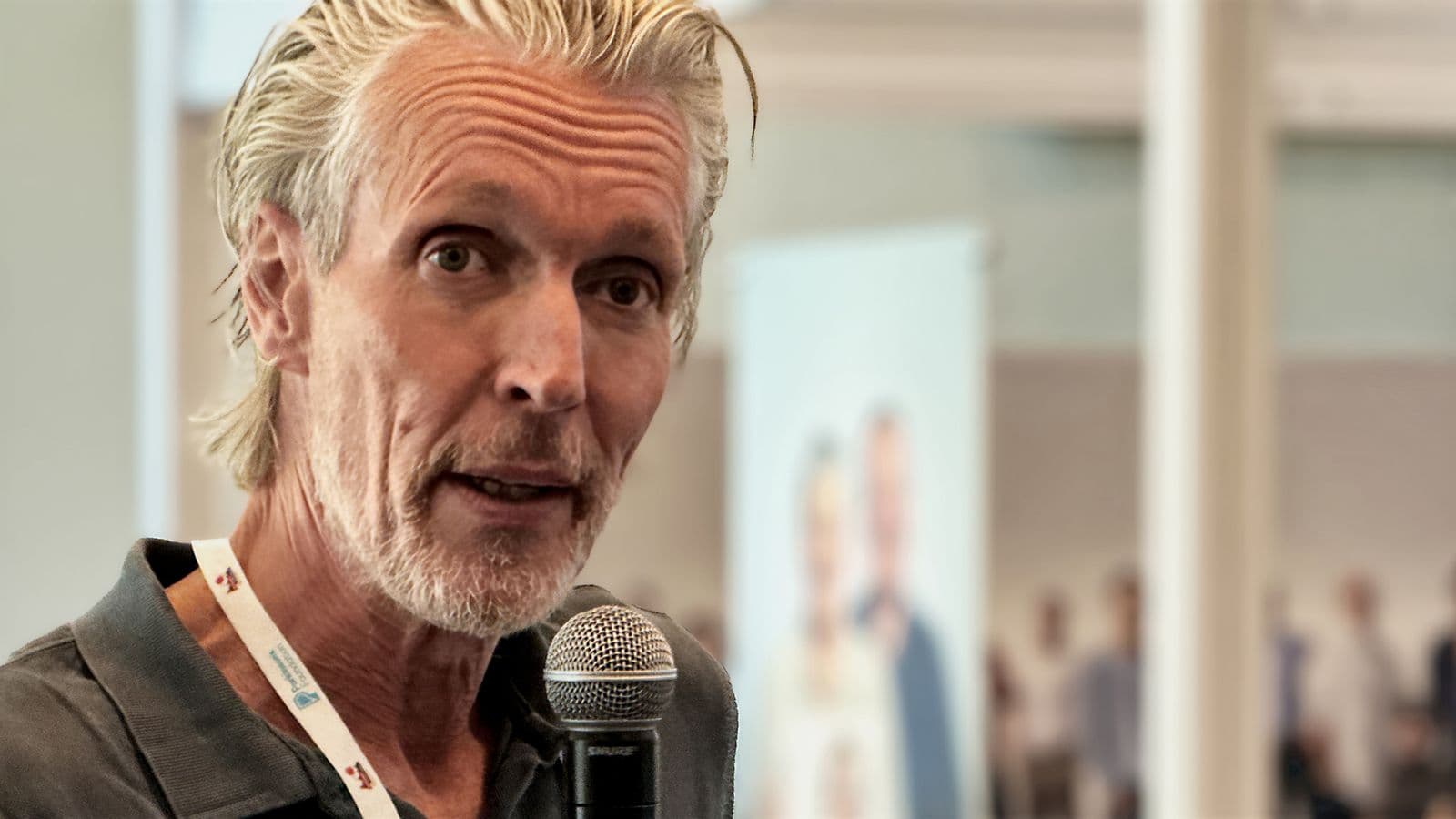
Claire Henchcliffe: Rebuilding the Parkinson’s Brain
Parkinson’s treatment has so far largely meant replacing lost dopamine. Neurologist Claire Henchcliffe is helping test a far more ambitious idea: rebuilding damaged brain circuits themselves.
The information in this article is for educational purposes only and is not intended as medical advice. Always consult a qualified healthcare professional for medical questions.
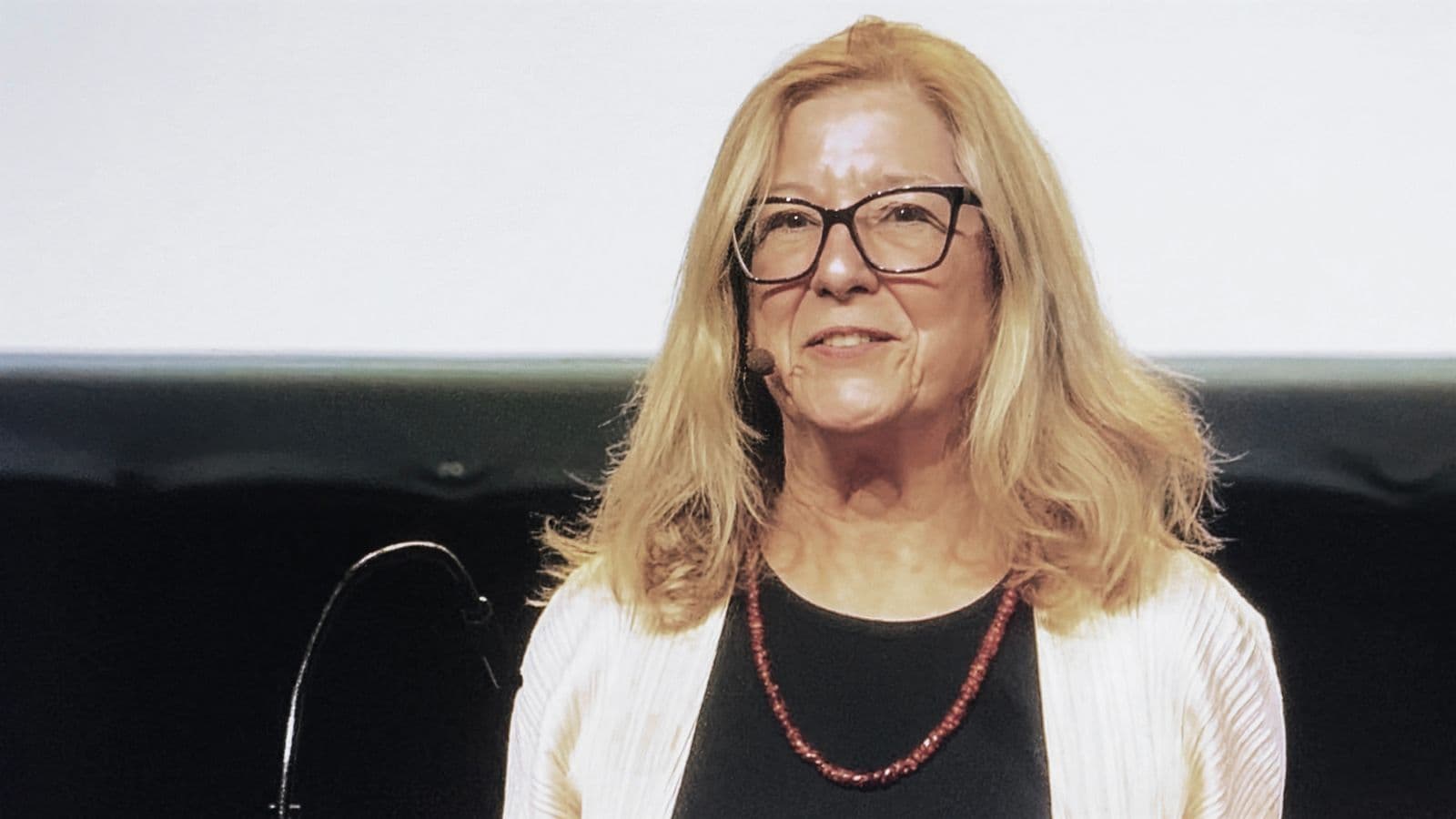
“We’re not going to see one single cure, we’re going to be looking at combinations.”
That realization from Claire Henchcliffe - chair of neurology at University of California, Irvine and one of the increasingly prominent voices in regenerative neurology and Parkinson’s research - increasingly pushes Parkinson’s research away from the idea of one decisive breakthrough and toward something more complicated: layered intervention across multiple biological systems.
According to Henchcliffe traditional frameworks may also describe only the final visible stage of a much longer biological process already unfolding silently inside the nervous system.
“One of the reasons why we badly, badly need to be able to detect Parkinson’s earlier,” Henchcliffe said in an interview with The Initiative Magazine, “is so that we have the chance to be proactive and intervene before Parkinson’s has caused more damage and has spread further.”
Rebuilding Dopamine Circuits
Henchcliffe is helping lead one of the field’s most ambitious regenerative efforts: stem-cell-derived dopamine neuron transplantation.
Parkinson’s medicine has largely replaced dopamine chemically through pills, patches or infusion therapies. Stem-cell transplantation attempts something far more radical - rebuilding damaged dopamine circuitry itself.
“Rather than providing oral dopamine replacement or pump-based dopamine replacement,” Henchcliffe explained during a recent presentation, “we could transplant cells that will function to deliver dopamine to the place where it’s needed.”
The concept has existed for decades. Earlier transplantation experiments using fetal tissue generated periods of excitement but ultimately produced inconsistent and often disappointing outcomes. Many early efforts struggled with limited tissue supply, uneven cell quality and poor survival after implantation.
Henchcliffe belongs to the generation of neurologists attempting to revisit the idea using modern stem-cell technology.
“This has been an absolute triumph of technology,” she said during the presentation.
Advances in embryonic stem cells and induced pluripotent stem cells now allow researchers to generate dopamine neurons in laboratory environments with far greater precision and scalability than previously possible. Her own group participated in one of the first major modern transplantation trials involving stem-cell-derived dopamine neurons implanted into Parkinson’s patients. The early results remain preliminary - and Henchcliffe repeatedly emphasizes restraint.
“This is very experimental,” she said. “We are very early taking our first few baby steps in this field.”
Still, the findings generated cautious excitement throughout the Parkinson’s community. Published results suggested the procedures appeared feasible and reasonably safe in small patient populations. Imaging scans indicated transplanted dopamine cells survived after implantation. Some patients also appeared to improve clinically.
“There’s some person-to-person variability,” Henchcliffe said. “But some people seem to improve after the surgery.”
Her summary remained careful.
“Cautious optimism.”
The restraint matters. For years, Parkinson’s research has cycled repeatedly through periods of intense therapeutic optimism followed by disappointment. Henchcliffe appears deeply aware of that history.
“There’s a little bit of hype around this field,” she admitted during her presentation.
And even a theoretically successful dopamine-cell transplant may not address many of the disease’s non-motor dimensions: autonomic dysfunction, cognitive decline, sleep disorders, pain or psychiatric symptoms. A therapy capable of restoring motor circuitry may still leave broader disease biology untouched.
Beyond the Magic Bullet
“Exercise is great for everyone,” Henchcliffe said. “But for Parkinson’s we need to do better. So it should be exercise and something else.”
The same systems thinking increasingly extends beyond Parkinson’s itself. Researchers are beginning to recognize overlapping biological themes across multiple neurodegenerative disorders:
inflammation, mitochondrial dysfunction, protein aggregation, aging-related stress responses and perhaps even latent viral processes.
“There are common themes,” Henchcliffe said, referring not only to Parkinson’s but also Alzheimer’s disease and ALS.
That convergence may ultimately push neurology toward broader models of brain health rather than rigid disease silos. At one point in the interview, Henchcliffe suggested researchers may eventually need to think less narrowly about Parkinson’s itself and more broadly about overlapping neurodegenerative processes.
“We need to get away from just thinking about the motor symptoms,” she said. “But we also need to get away from just thinking about alpha-synuclein.”
The implication was difficult to miss: the future of Parkinson’s research may become less about one protein, one pathway or one diagnosis than about interconnected systems biology unfolding across aging brains.
The Problem With Parkinson’s
Researchers repeatedly now return to a question that would have sounded almost heretical in neurology not long ago: What if Parkinson’s disease is not one disease at all? The question surfaces again and again across lectures, hallway discussions and private conversations between clinicians and scientists. Increasingly, many researchers believe the category itself may be biologically misleading.
Patients grouped under the same diagnosis often experience radically different disease trajectories. Some decline rapidly. Others slowly. Some develop severe cognitive symptoms. Others primarily struggle with autonomic dysfunction, sleep disorders or movement impairment. Some respond dramatically to dopamine therapies. Others only partially. Underneath those differences may lie profoundly different biology.
“Parkinson’s is so very heterogeneous,” Henchcliffe said. “We’re looking at different combinations or different constellations of symptoms in different people.”
Historically, the traditional Parkinson’s diagnosis served an important clinical purpose. It identified people likely suffering from dopamine loss inside motor circuits deep within the brain - patients who would often respond to dopamine replacement therapies such as levodopa. That framework transformed Parkinson’s medicine in the twentieth century. But increasingly, researchers believe it may be insufficient for the next phase of neurology.
“Perhaps we shouldn’t be talking about this label of Parkinson’s,” Henchcliffe said.
The statement carries implications far beyond terminology. If Parkinson’s ultimately represents multiple overlapping biological processes converging into similar outward symptoms, then much of modern Parkinson’s research may need to be reorganized around underlying mechanisms rather than clinical appearance alone.
“We have to define whatever they have,” Henchcliffe said, “by those fundamental pathway changes.”
That transition - from symptom-defined neurology to biologically stratified neurology - increasingly resembles transformations that have already reshaped parts of oncology. Years ago, physicians often spoke broadly about “treating cancer.” Today, cancer medicine increasingly targets highly specific biological subtypes defined through molecular pathways and genetic markers.
“You would never talk about treating cancer now,” Henchcliffe said. “We’re treating specific types of cancer.”
Neurology, she believes, may now be approaching a similar transition.
Disease Before Symptoms
“Are we at a point where we can take those non-motor symptoms and know for sure that everyone is going to get Parkinson’s?” Henchcliffe asked.
The answer, at least for now, remains no.
That uncertainty helps explain why neurologists remain reluctant to formally diagnose Parkinson’s before classical motor symptoms emerge. Instead, the field is slowly moving toward something closer to probabilistic medicine - estimating biological risk rather than assigning rigid labels.
Patients with REM sleep behavior disorder, severe smell loss or strong genetic predisposition may eventually become candidates for monitoring, biomarker screening or preventive intervention long before traditional diagnosis. That possibility could fundamentally alter the structure of neurology itself.
Traditionally, neurological diseases are often diagnosed only after substantial neuronal damage has already occurred. Parkinson’s may become one of the first major neurodegenerative diseases where intervention begins during prodromal or preclinical phases.
“Wouldn’t it be wonderful,” Henchcliffe said, “if I could provide an early diagnosis to someone who perhaps they’ve just noticed an initial tremor but really nothing else, and if I could give them something to stop that progressing?”
But building that future requires something medicine still largely lacks: reliable biological infrastructure. Researchers still do not possess sufficiently precise biomarkers, imaging systems or predictive models capable of determining who will develop disease, when progression will occur or which therapies may work for which patients. The complexity becomes even greater once researchers begin to suspect they may not be studying one disease process at all.
Why Clinical Trials Keep Failing
That biological heterogeneity may also help explain one of the field’s deepest frustrations: the repeated collapse of disease-modifying clinical trials. Again and again, promising therapies targeting mitochondrial dysfunction, oxidative stress, inflammation or alpha-synuclein aggregation have failed to produce clear clinical success.
Henchcliffe remembers believing early in her own career that mitochondrial therapies might fundamentally alter Parkinson’s progression.
“I was really convinced that high-dose coenzyme Q10 was the way to go,” she said. “We could fix it in mice, then shouldn’t we be able to stop Parkinson’s progressing?”
The therapy ultimately failed. But increasingly, researchers suspect such failures may partly reflect trial design itself. If Parkinson’s patients grouped together under one diagnosis actually represent multiple biological subtypes, then therapies effective for one subgroup may disappear statistically inside larger heterogeneous populations.
“Some people with Parkinson’s sure have mitochondrial dysfunction and some don’t,” Henchcliffe said. “And we talk about inflammation and some have inflammation and some don’t.”
Genetics may become one route toward that future. Parkinson’s-linked mutations such as LRRK2 and GBA are increasingly being studied not merely as risk factors, but as biologically distinct disease processes potentially requiring different therapeutic strategies.
The future, Henchcliffe believes, will likely involve combinations of therapies matched to underlying biology rather than singular universal treatments.
The Human Problem of Neurology
Despite the discussion of biomarkers, genetics and regenerative medicine, Henchcliffe repeatedly returned to something more difficult to quantify: the lived variability of patients themselves. As a practicing movement-disorders neurologist, she still spends time in clinic every week.
“I really enjoy having my clinic,” she said, “because rather than reading in research papers or listening to people who are teaching about Parkinson’s, I hear it from the person.”
That perspective has made her cautious about relying too heavily on brief examinations, clinical scales or isolated neurological snapshots.
Some patients appear healthy during clinic visits while privately struggling with exhaustion, anxiety or disabling non-motor symptoms invisible during standard assessments. Others unconsciously “perform wellness” during medical appointments.
“We get snapshots,” Henchcliffe said. “We don’t get the entire picture.”
That limitation increasingly shapes how researchers think about future monitoring technologies:
continuous data collection, wearable devices, longitudinal biomarkers and more individualized approaches to disease tracking. Because one of the deepest problems in Parkinson’s research may be that the disease often behaves differently in everyday life than it does inside clinics, trials or neurological scoring systems.
That complexity may ultimately become one of the defining challenges of the next era of neurology itself: how to build biologically precise medicine around diseases that remain profoundly individual in how they are experienced.
And how to intervene early enough that Parkinson’s, at least in its most debilitating forms, may someday never fully arrive at all.
Also in Parkinson's Disease
Bas Bloem: The Era of Personalized Parkinson's Has Begun
For one of the world’s leading Parkinson’s researchers, Bas Bloem, the future of the field begins with a radical shift in perspective: Parkinson’s is not one disease, but millions.

Editor’s Note: Why We’re Building The Initiative
How we accidentally became the founders of a Magazine.
The New President of WPC: Malú Gámez Tansey - This is the Beginning of the End
Parkinson’s disease has long been understood through dying neurons and misfolded alpha-synuclein. Neuroscientist Malú Gámez Tansey believes chronic inflammation may be one of the central forces driving the disease.