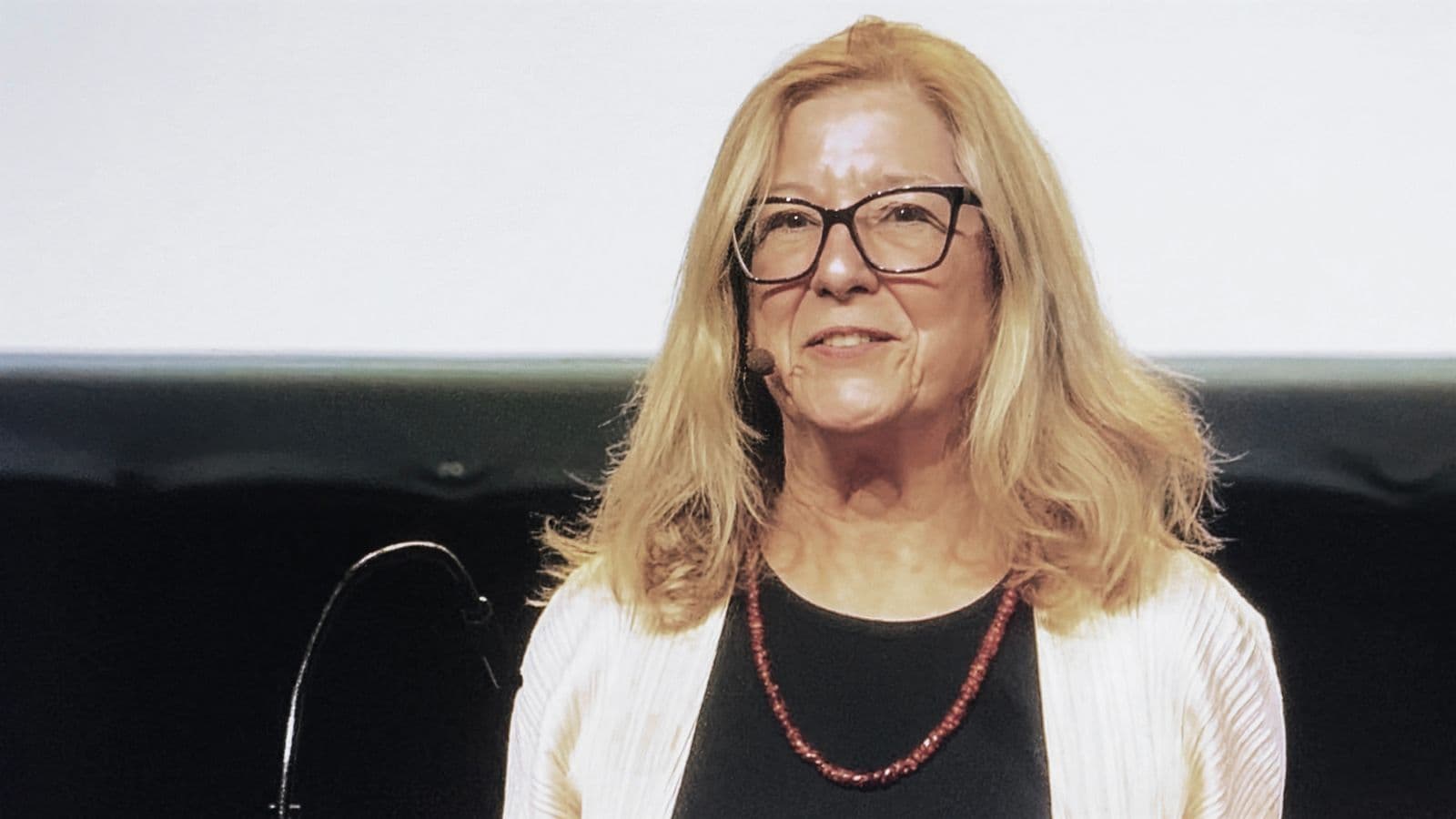
Bas Bloem: The Era of Personalized Parkinson's Has Begun
For one of the world’s leading Parkinson’s researchers, Bas Bloem, the future of the field begins with a radical shift in perspective: Parkinson’s is not one disease, but millions.
The information in this article is for educational purposes only and is not intended as medical advice. Always consult a qualified healthcare professional for medical questions.
Parkinson's disease is one of the fastest-growing neurological conditions on the planet. Yet for many people living with Parkinson's, the fundamental question remains unchanged: where is the breakthrough?
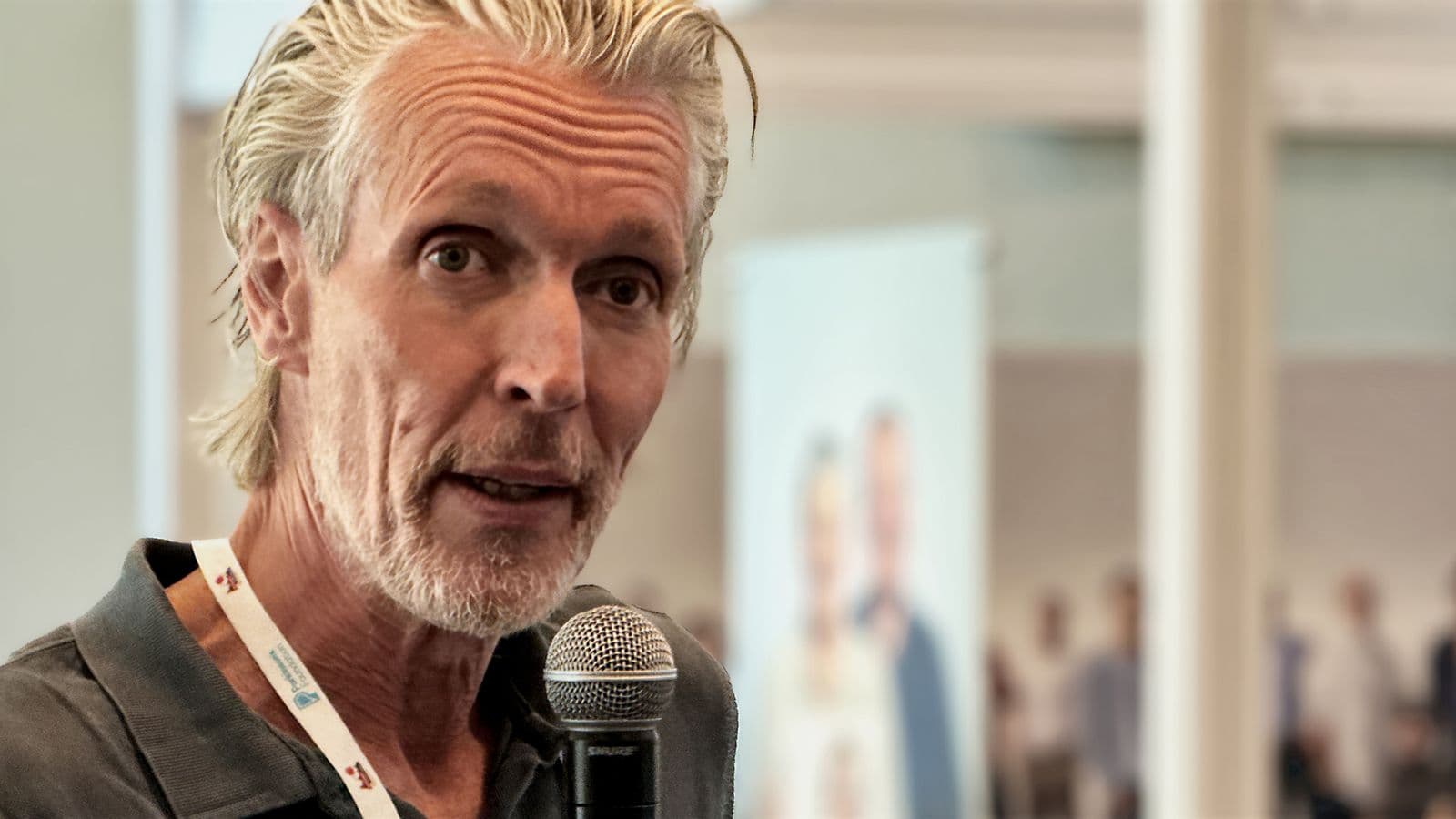
Bas Bloem, a professor of neurology associated with Radboud University Medical Center in Nijmegen, the Netherlands , understands the frustration. "The cornerstone of treatment is still a drug introduced in 1967," he says in an interview with The Initiative Magazine. But from his perspective, as a neurologist and one of the world's most influential voices in Parkinson's medicine, focusing solely on the absence of a cure risks overlooking a profound transformation already underway.
"Parkinson's today is radically different from twenty years ago," Bloem says. "We have gone from monodisciplinary to multidisciplinary care. We have gone from doctor-driven care to patient-centered care and shared decision-making."
The field has produced remarkable advances in neuroscience, genetics and brain imaging. There is now deep brain surgery, as a viable option for well-selected patients. Researchers have uncovered multiple disease-associated genes. Biomarkers are beginning to transform diagnosis. Stem-cell therapies might be entering clinical practice. These developments are less dramatic than a miracle cure, but according to Bloem they still point toward something important: the beginning of the era of personalized Parkinson's medicine.
12 million Parkinson's Diseases
Patients may present differently, symptoms may vary, progression may differ. Yet the underlying Parkinson's has largely been treated as a single disorder. Bloem believes that assumption is beginning to collapse.
"Parkinson's is not one disease," he says.
The idea has become so central to his thinking that in 2021, he submitted an invited review article to The Lancet under the title Parkinson's Diseases. The journal rejected the title. "But in the opening paragraph in that article, we do state that there are millions of Parkinson's diseases in the world."
The number is almost literal. By recent estimates, some 11.8 million people were living with Parkinson's in 2021 (Dommershuijsen, Darweesh & Bloem, 2026). Bloem's provocation is that each of them may, in effect, have their own.
Some patients carry genetic mutations; others do not. Some develop disease driven primarily by inflammation, others by mitochondrial dysfunction, lysosomal failure, protein aggregation, or most likely, by several processes at once. Increasingly, scientists believe these differences matter. They could explain why so many clinical trials have failed, and why treatments that help some patients do little for others.
Clinical trials still largely follow a one-size-fits-all approach. But that is changing. "I think that will change over the next five years," Bloem says. Rather than asking whether a treatment works for Parkinson's disease, future trials may ask whether it works for a specific biological subtype. It could ultimately change everything.
The Biomarker Revolution
Much of this shift is being driven by biomarkers.
Historically, Parkinson's diagnosis has depended on clinical observation. Doctors watched patients move, looking for tremor, rigidity and slowness. Today, that model is evolving. "One major development is that we have gone from a purely clinical diagnosis to a more biological definition," Bloem says.
He is describing a genuine inflection point. In 2024, two international groups independently proposed defining the disease by its underlying neuronal α-synuclein pathology, the genetic risk and the presence of abnormal dopamine transmission, thereby staging the disease biologically, rather than waiting for the motor syndrome to declare itself (Simuni et al., 2024; Hoglinger et al., 2024). The diagnosis, in this view, becomes a fact about the brain before it is a fact about movement. That has major implications for drug development, and for when to deploy these treatments. The idea is that the earlier the treatment is initiated, the more likely it is to be capable of slowing disease progression.
"We are now able to enrich trials with people who more certainly have the pathology we are targeting."
For years, experimental therapies were tested in diverse populations whose members may not have shared the same underlying mechanisms. If Parkinson's actually is many diseases, treating all patients as one group may have buried beneficial therapies in the noise. The goal now is to match the right treatment to the right biology.
"We are beginning to tailor treatments to the underlying pathophysiology happening in each individual brain," Bloem says.
Beyond Parkinson's
The complexity does not stop there. Parkinson's rarely exists in isolation.
"Most people who die have both Alzheimer pathology, Parkinson pathology and other pathologies," Bloem says.
-1600x900.jpg&w=3840&q=75)
Even a therapy that successfully targets one disease process may leave the others untouched.
"If you have a treatment that focuses only on Parkinson's disease, you will probably still progress."
The future, therefore, may not lie in a single blockbuster drug. It may require combinations of treatments aimed at several pathways in parallel: "Understanding and embracing that complexity is the basis for improving personalized treatment."
From Treatment to Prevention
Perhaps the most striking shift in Bloem's thinking concerns a question Parkinson's medicine has historically neglected: can the disease be prevented?
Drawing a parallel with cardiovascular medicine, he argues that future strategies may increasingly focus on identifying risk and reducing it before symptoms emerge. This is no longer soft advice at the margins of care. A 2026 review in The Lancet Neurology argues that lifestyle interventions, exercise above all but also nutrition, sleep and stress, may do more than manage symptoms. They may modify the course of the disease itself (Trinh et al., 2026).
That reflects a broader transformation. Researchers are increasingly studying prodromal Parkinson's, the period before classical motor symptoms appear.
"Prodromal Parkinsonism is Parkinson's disease," Bloem says.
REM sleep behavior disorder, loss of smell and chronic constipation are no longer viewed merely as risk factors. They are increasingly understood as early manifestations of the disease itself. Under the new biological framework, they become stages that can be detected before the first tremor (Simuni et al., 2024; Hoglinger et al., 2024). Trials are now recruiting people who act out their dreams at night, or who have lost their sense of smell and carry a confirming biomarker, on the logic that treating disease before substantial brain damage occurs may prove more effective than treating it afterwards.
A Growing Public Health Challenge
The urgency is growing. Earlier this year, researchers at Radboud University Medical Center reported that although the annual number of new diagnoses has remained relatively stable in the Netherlands, the total number of people living with the disease continues to rise fast (Simões et al., 2026). The rate of growth is likely even faster in other parts of the world, such as China, parts of Africa and the US.
Bloem and two Radboud colleagues, Lisanne Dommershuijsen and Sirwan Darweesh, recently put a memorable image to that arithmetic. In a Nature Reviews Neurology commentary, they model the disease's growth as a bathtub (Dommershuijsen, Darweesh & Bloem, 2026). The water level is the number of people living with Parkinson's. The size of the tub is the capacity of the health system. The water rose from 2.5 million people in 1990 to 11.8 million in 2021, and is heading toward a projected 25.2 million by 2050.
Bloem believes environmental factors may be filling the tub faster. "I think Parkinson's is largely a man-made disease," he says. The statement is increasingly shared by scientists worldwide, although some continue to contend this perspective. But Bloem and others have argued in detail that Parkinson's is predominantly environmental in origin (Dorsey & Bloem, 2024). One contributing factor is pesticides, the global use of which has climbed steeply over the past three decades (FAO, 2025). "One reason Europe may be doing slightly better than other parts of the world is that we have banned likely toxic substances such as trichloroethylene, paraquat and other pesticides, and have reduced air pollution."
Parkinson's, then, is increasingly viewed a societal problem.
The New Architecture of Care
If the tub cannot simply be made bigger, the alternative is to make every encounter inside it count for more. That is where the unglamorous half of Bloem's transformation lives, and where it is now being tested at national scale.
In November 2023, a Dutch consortium that included Bloem released an integrated allied-health guideline for Parkinson's, spanning physical therapy, occupational therapy, speech and language therapy, and dietetics (Langbroek-Amersfoort et al., 2026). Instead of being a static document, it works as a decision-support tool. It covers forty problem areas, adjusts its advice depending on the stage of the disease, and is updated every six months. There are two versions: one for clinicians and one for patients, making it easier for both sides to make decisions together. It is Bloem’s patient-centred, multidisciplinary approach turned into software.
The early returns are striking, and instructive. Within a year, awareness among allied health professionals reached 99% and uptake 95%. Yet only 29% were using the tool to coordinate care across disciplines, and only 25% for shared decision-making (Langbroek-Amersfoort et al., 2026). The personalized, collaborative practices at the heart of the design were the ones clinicians were slowest to adopt.
An important lesson is that better biology and better tools are not enough on their own. Personalized Parkinson's care will be won or lost in the habits of the consultation room.
Hope, Not Hype
Bloem is equally careful about the field's most celebrated advances. Stem-cell therapies have generated enormous enthusiasm, yet he rejects the notion that they represent a cure.
"People mistake it for a cure. It is not a cure." He describes them instead as a sophisticated form of symptomatic treatment, "an effective way of bringing a small dopamine factory into the brain," even as the underlying disease continues. "Even the graft is attacked by the underlying disease process."
Bloem’s concern is that stem-cell therapies is being sold as a cure, by malafide companies that take abuse of people’s despair. “I think that is over-promising."
The distinction captures his outlook. He is optimistic, but wary of hype. The future, he argues, lies in many interconnected advances arriving at once: biomarkers, precision medicine, platform trials, prodromal intervention, digital monitoring and a deeper grasp of disease biology. Together they may transform care. Not overnight. But fundamentally.
For people newly diagnosed, his message stays simple. "It is a time of hope." Not certainty. Not guarantees. Hope.
"Personalized treatment means treatment tailored to your pathophysiology and tailored to your wishes and needs."
In Parkinson's research many have looked for a single answer. The next era may be defined by something far more powerful: the recognition that there are millions of answers.
_
Direct quotations from Bas Bloem are drawn from interviews with The Initiative.
Also in Parkinson's Disease
Claire Henchcliffe: Rebuilding the Parkinson’s Brain
Parkinson’s treatment has so far largely meant replacing lost dopamine. Neurologist Claire Henchcliffe is helping test a far more ambitious idea: rebuilding damaged brain circuits themselves.

Editor’s Note: Why We’re Building The Initiative
How we accidentally became the founders of a Magazine.
The New President of WPC: Malú Gámez Tansey - This is the Beginning of the End
Parkinson’s disease has long been understood through dying neurons and misfolded alpha-synuclein. Neuroscientist Malú Gámez Tansey believes chronic inflammation may be one of the central forces driving the disease.